




Posted By: Dr. Usha M Kumar on 21 Sep 2026
Editorial note: The article below is newly written for educational and SEO purposes. It is not copied from a single source. Because endometriosis surgery is complex and individual treatment decisions depend on examination, imaging and surgical findings, all doctor-specific credentials, outcomes, case numbers and procedure claims should be verified by the clinic before publication.
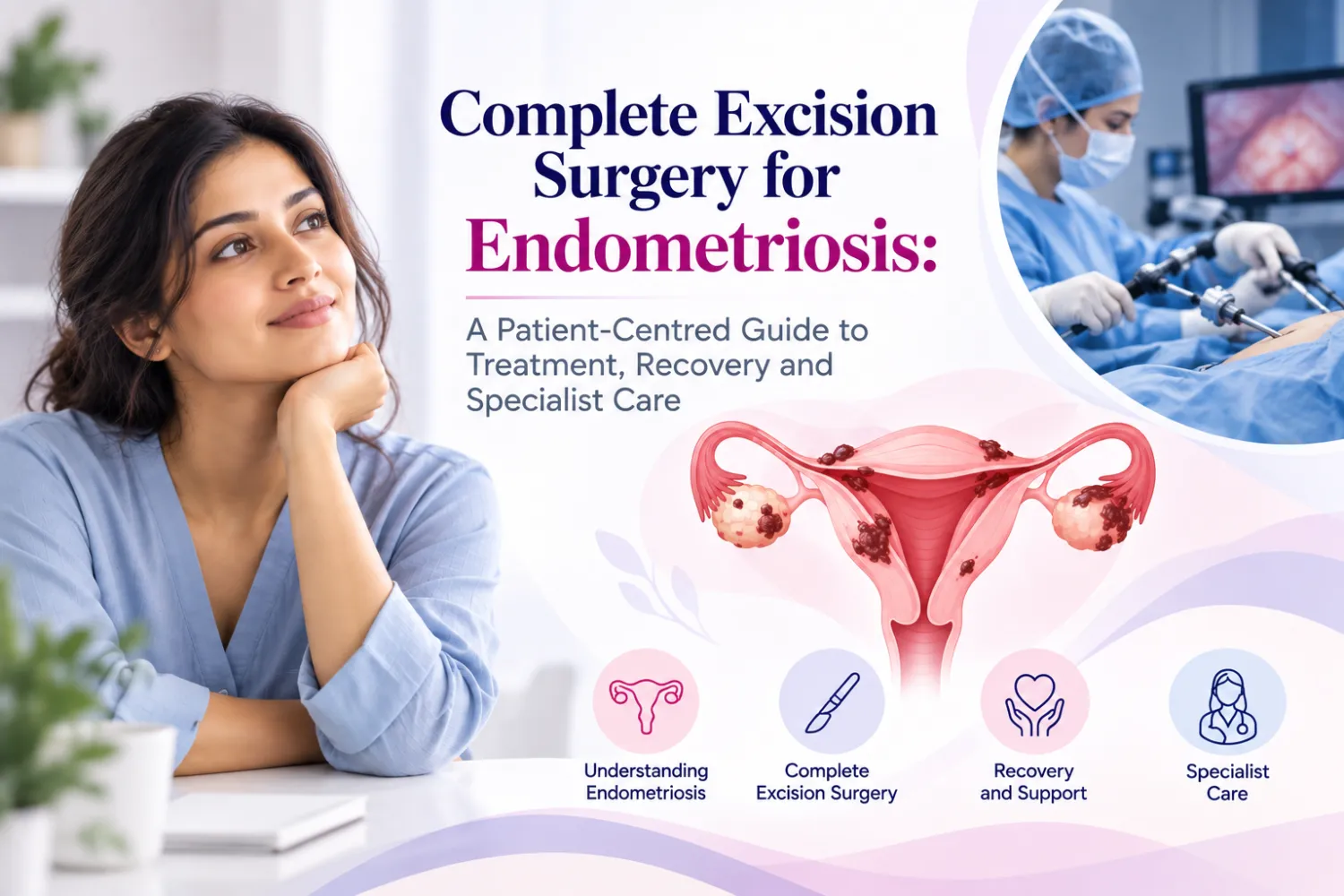
Complete Excision Surgery for Endometriosis: A Detailed Guide to Treatment, Benefits, Risks and Recovery
Endometriosis can affect much more than the menstrual cycle. For some women, it causes severe period pain, pain during intercourse, painful bowel movements, urinary discomfort, infertility or persistent pelvic pain that interferes with everyday life. When medication does not provide adequate relief—or when disease has affected organs such as the ovaries, bowel, bladder or ureters—surgery may become an important part of treatment.
One surgical approach that is increasingly discussed is complete excision surgery for endometriosis. The aim is to identify and remove visible endometriotic lesions rather than simply treating their surface. However, “complete excision” should not be understood as a guarantee that endometriosis can never return. Endometriosis is a chronic condition, and the extent of surgery, the location of disease, fertility goals and postoperative treatment all influence long-term outcomes.
This article explains what complete excision surgery involves, who may benefit, how it differs from ablation, what happens during surgery, possible risks, recovery, fertility considerations and how to choose an appropriately trained endometriosis surgeon.
Medical disclaimer: This article is for education and does not replace an in-person medical consultation. The suitability of excision surgery must be assessed individually using symptoms, examination, imaging, medical history, fertility goals and the suspected extent of disease.
What Is Endometriosis?
Endometriosis is a chronic gynaecological condition in which tissue resembling the lining of the uterus develops outside the uterine cavity. These deposits may occur on or near the ovaries, fallopian tubes, pelvic peritoneum, uterosacral ligaments, rectovaginal area, bowel, bladder or other pelvic structures.
Although this tissue is outside the uterus, it can respond to hormonal changes during the menstrual cycle. This may lead to inflammation, irritation, bleeding within the pelvis, scar tissue and adhesions.
Common symptoms include:
- Severe or worsening period pain
- Chronic pelvic or lower abdominal pain
- Pain during or after sexual intercourse
- Painful bowel movements, particularly during menstruation
- Pain or difficulty passing urine during periods
- Heavy or irregular menstrual bleeding
- Bloating, constipation or diarrhoea related to the menstrual cycle
- Difficulty conceiving
- Fatigue and reduced quality of life
Not every woman experiences the same symptoms. Some women have extensive disease with relatively few symptoms, while others experience severe pain despite apparently limited disease. Therefore, treatment should not be based only on the stage or visual appearance of endometriosis.
What Does Complete Excision Surgery Mean?
Excision surgery involves carefully cutting out and removing endometriotic lesions from the tissue in which they are located. The removed tissue may be sent for histopathological examination to confirm the diagnosis.
The term complete excision generally refers to an attempt to remove all identifiable endometriotic disease that can be safely treated during the procedure. Depending on the location and depth of the lesions, this may include:
- Superficial peritoneal lesions
- Deep infiltrating endometriosis
- Endometriosis involving the uterosacral ligaments
- Lesions in the rectovaginal space
- Ovarian endometriomas
- Endometriosis involving the bowel
- Disease affecting the bladder or ureters
- Dense adhesions that have distorted pelvic anatomy
The exact procedure varies from patient to patient. Complete excision does not always mean removing every suspicious area regardless of risk. A responsible surgeon must balance disease removal with the protection of vital structures, ovarian tissue, bowel function, urinary function, fertility and long-term quality of life.
The goal is not simply to perform a more extensive operation. The goal is to achieve the most appropriate disease clearance while minimising avoidable harm.
Excision Versus Ablation: What Is the Difference?
Two terms commonly used in endometriosis surgery are excision and ablation.
Excision
During excision, the surgeon cuts out the endometriotic lesion or removes it from the affected tissue. This may allow the surgeon to address disease that extends beneath the surface.
Potential advantages include:
- Removal of the visible lesion rather than only treating its surface
- Ability to obtain tissue for histological examination
- Potentially more complete treatment of selected deep or fibrotic lesions
- Opportunity to assess the depth and extent of disease during surgery
However, excision can be technically demanding. If performed near the bowel, ureter, bladder, major blood vessels or ovary, it requires advanced anatomical knowledge and careful surgical technique.
Ablation
Ablation involves destroying the surface of an endometriotic lesion using energy, such as electrosurgery, laser or another energy-based method. It may be suitable for selected superficial lesions.
Potential limitations include:
- The full depth of a lesion may not be treated
- Fibrotic or deeply infiltrating disease may be difficult to address adequately
- Thermal injury may occur if energy is used close to delicate structures
- The appropriateness of ablation depends on the location and nature of the disease
The European Society of Human Reproduction and Embryology states that clinicians may consider excision instead of ablation when surgery is performed for endometriosis-associated pain. However, the recommendation is not a declaration that excision is automatically superior for every lesion or every patient. The best technique depends on disease location, depth, surgical expertise and the patient’s priorities.
Is Complete Excision Better Than Ablation for Every Patient?
Not necessarily.
It is tempting to assume that removing every lesion is always the best option. In practice, endometriosis surgery is more nuanced. A superficial lesion on the pelvic peritoneum is different from a lesion involving the bowel wall, ureter, bladder or ovarian cortex.
The decision may depend on:
- Whether the lesion is superficial or deeply infiltrating
- The location of the disease
- Whether symptoms are linked to the lesion
- The presence of adhesions or organ distortion
- The patient’s age and fertility plans
- Ovarian reserve
- Previous operations
- The risk of injury to nearby organs
- The surgeon’s experience with complex endometriosis
- Whether additional specialists may be required
For example, removing an ovarian endometrioma may reduce pain or recurrence risk in selected situations, but ovarian surgery can also reduce ovarian reserve. Similarly, excision of bowel endometriosis may be appropriate for some patients but requires detailed planning because bowel surgery has specific risks.
Therefore, “complete” should mean carefully planned and appropriately thorough, not indiscriminately aggressive.
When Is Complete Excision Surgery Considered?
Surgery is only one treatment option for endometriosis. Many patients initially receive medical treatment, pain management, hormonal suppression, physiotherapy or a combination of approaches.
Excision surgery may be considered when:
- Symptoms remain significant despite medical treatment
Hormonal treatments can reduce or suppress endometriosis-related symptoms, but they do not remove existing lesions. If pain remains severe or substantially affects work, relationships, sleep or daily functioning, surgery may be discussed.
- Deep endometriosis is suspected
Deep endometriosis may involve structures such as:
- Uterosacral ligaments
- Rectovaginal septum
- Bowel
- Bladder
- Ureters
- Pelvic sidewall
Deep disease can require advanced imaging, multidisciplinary planning and specialist surgery. ESHRE recommends referral of women with deep endometriosis to a centre with appropriate expertise.
- An ovarian endometrioma is present
An ovarian endometrioma, sometimes called a “chocolate cyst,” develops when endometriosis affects the ovary. Surgery may be considered for persistent pain, large or complex cysts, concerning imaging features, complications or selected fertility-related circumstances.
However, ovarian surgery must be planned carefully because removal or damage to healthy ovarian tissue may affect ovarian reserve.
- Adhesions have distorted pelvic anatomy
Endometriosis can cause organs to become stuck together. Adhesiolysis—the careful division of adhesions—may be performed along with excision to restore anatomy and improve access to affected areas.
- Fertility treatment requires treatment of selected disease
In some cases, surgery may be considered as part of a fertility plan. However, surgery is not automatically the first step for every patient trying to conceive. The decision depends on age, ovarian reserve, tubal status, sperm factors, disease severity, previous surgery and whether assisted reproductive treatment may be more appropriate.
- There is suspected involvement of other organs
Bowel, bladder or ureteric involvement may require a planned operation involving a multidisciplinary team. The patient should understand beforehand whether a colorectal surgeon, urologist, fertility specialist or other expert may be involved.
How Is a Patient Evaluated Before Excision Surgery?
A careful preoperative assessment is essential. The surgeon should not rely solely on symptoms or a routine ultrasound.
Medical and symptom history
The consultation may explore:
- Age at onset of symptoms
- Menstrual pain and its severity
- Pain outside menstruation
- Pain during intercourse
- Bowel or urinary symptoms
- Previous surgeries
- Previous hormonal treatments
- Fertility history
- Pregnancy plans
- Previous imaging and operative reports
- Family history and other medical conditions
A pain diary can help identify patterns and clarify which symptoms are most disruptive.
Pelvic examination
Depending on the patient’s comfort and clinical situation, examination may help identify tenderness, restricted mobility, nodules or other findings. A normal examination does not rule out endometriosis.
Ultrasound
A specialised transvaginal ultrasound performed by someone experienced in endometriosis imaging may help identify:
- Ovarian endometriomas
- Deep endometriosis
- Reduced organ mobility
- Adhesions
- Possible bowel involvement
- Changes in the sliding sign
Not every ultrasound detects all forms of endometriosis, particularly superficial disease.
MRI
Magnetic resonance imaging may be recommended when deep endometriosis is suspected or when the surgeon needs detailed information about the relationship of lesions to the bowel, bladder, ureters or pelvic sidewall.
MRI does not detect every lesion, but it can be valuable for surgical planning.
Fertility and ovarian reserve assessment
If pregnancy is a current or future priority, the evaluation may include:
- Antral follicle count
- Anti-Müllerian hormone testing, where appropriate
- Assessment of the ovaries and endometriomas
- Tubal evaluation, if relevant
- Semen analysis for a partner, when applicable
- Discussion with a fertility specialist
Ovarian reserve tests do not predict pregnancy with certainty, but they can support informed decision-making.
What Happens During Complete Excision Surgery?
Most endometriosis excision procedures are performed using minimally invasive surgery, usually laparoscopy. Robotic-assisted laparoscopy may be used in selected centres and cases.
The exact steps depend on the disease pattern, but surgery may involve the following stages.
- Diagnostic inspection of the pelvis
The surgeon examines the pelvic organs to identify the location, colour, size and distribution of lesions. Endometriosis may appear as black, blue, red, white or subtle areas of abnormal tissue. Not all lesions have the same appearance.
- Mapping the disease
The surgeon assesses:
- The ovaries and fallopian tubes
- The pelvic peritoneum
- The uterus
- The uterosacral ligaments
- The rectovaginal area
- The bowel
- The bladder
- The ureters
- The pelvic sidewalls
- Adhesions and anatomical distortion
Mapping helps determine whether the procedure is straightforward or requires advanced dissection.
- Adhesiolysis
Adhesions may be divided carefully to separate organs and restore anatomy. This can be particularly important when the ovaries are fixed behind the uterus or when the bowel is attached to the pelvic structures.
- Excision of superficial lesions
Superficial lesions may be removed from the peritoneal surface using carefully controlled dissection. The surgeon aims to remove the lesion while avoiding injury to underlying structures.
- Excision of deep lesions
Deep endometriosis may require dissection through fibrotic tissue. Depending on the location, procedures may include:
- Excision from the uterosacral ligaments
- Excision of rectovaginal disease
- Shaving of bowel lesions
- Disc excision of selected bowel lesions
- Segmental bowel resection in selected cases
- Bladder lesion excision
- Ureterolysis or treatment of ureteric disease
Not every patient requires bowel resection or extensive organ surgery. The technique is selected according to the depth and extent of infiltration.
- Treatment of ovarian endometrioma
Ovarian endometrioma surgery may involve cystectomy, in which the cyst wall is removed, or another technique selected according to the patient’s circumstances.
The surgeon must be especially careful to preserve healthy ovarian tissue and avoid unnecessary thermal damage. Current guidance specifically highlights the importance of minimising ovarian damage during surgery for endometriomas.
- Examination of the urinary tract and bowel
When disease is close to the ureter, bladder or bowel, the surgeon may assess whether the lesion has invaded or compressed these structures. Additional procedures or specialists may be needed.
- Specimen retrieval and histopathology
Removed tissue may be sent for laboratory examination. Histopathology can help confirm that the tissue is consistent with endometriosis and may identify other findings when relevant.
Robotic-Assisted Excision Surgery for Endometriosis
Robotic-assisted surgery is a form of minimally invasive surgery in which the surgeon controls specialised instruments through a robotic platform.
Potential technical benefits may include:
- Magnified three-dimensional visualisation
- Articulated instruments
- Fine movements in confined anatomical spaces
- Improved ergonomics for the surgeon
- Assistance with complex suturing and dissection
Robotic surgery may be useful in selected cases of deep or complex endometriosis, particularly where precise dissection is required. However, the robot does not operate independently, and it does not automatically make a procedure safer or more effective.
Outcomes depend on:
- The surgeon’s training and experience
- Appropriate patient selection
- The extent of disease
- Availability of a multidisciplinary team
- Hospital infrastructure
- Perioperative and postoperative care
The most important question is not simply whether a surgeon uses robotic technology. It is whether the surgeon has substantial experience treating the specific form of endometriosis involved.
What Are the Potential Benefits of Complete Excision Surgery?
Potential benefits vary by patient and cannot be guaranteed. They may include:
Reduction in pain
Surgery may reduce endometriosis-associated pain, especially when lesions or adhesions contributing to symptoms are treated. However, pain can have multiple causes, including pelvic floor dysfunction, central sensitisation, adenomyosis, irritable bowel syndrome, bladder pain syndrome and nerve-related pain.
Removing lesions may not eliminate every source of pain.
Improvement in daily functioning
If surgery successfully reduces pain, some patients may experience improvement in:
- Sleep
- Mobility
- Work attendance
- Sexual wellbeing
- Exercise tolerance
- Emotional wellbeing
- General quality of life
Treatment of anatomical distortion
Adhesiolysis and excision may restore the relationship between pelvic organs, although anatomy may remain altered in advanced disease.
Management of endometriomas
Surgery may address selected ovarian cysts, particularly when they cause symptoms or create other clinical concerns.
Support for fertility planning
In carefully selected patients, surgery may improve access to the reproductive organs, treat adhesions or address disease that may interfere with conception. Nevertheless, surgery can also affect ovarian reserve and should be integrated into an overall fertility strategy.
Does Complete Excision Cure Endometriosis?
It is important to use the word cure carefully.
Complete excision may remove visible disease and provide long-term symptom relief for some patients. However, endometriosis is considered a chronic condition, and:
- Microscopic disease may not be visible
- Some lesions may be unsafe to remove completely
- New lesions may develop
- Residual disease may remain
- Pain may persist for reasons unrelated to active lesions
- Hormonal cycling may contribute to recurrence
Even hysterectomy does not necessarily eliminate endometriosis-related symptoms or disease, particularly if endometriotic lesions outside the uterus are not removed. ESHRE specifically notes that hysterectomy does not necessarily cure endometriosis or symptoms.
A more accurate description is that excision aims to remove treatable disease and improve symptoms or function, not promise permanent eradication.
What Are the Risks of Excision Surgery?
All surgery carries risks. The risks of endometriosis excision depend on the extent and location of disease, previous operations, the patient’s health and the complexity of the procedure.
Possible risks include:
- Bleeding
- Infection
- Blood clots
- Anaesthetic complications
- Injury to the bowel
- Injury to the bladder
- Injury to the ureters
- Injury to blood vessels
- Need for repair of an injured organ
- Temporary or prolonged urinary problems
- Bowel-related complications
- Adhesion formation
- Conversion to open surgery
- Need for additional procedures
- Persistent pain
- Recurrence of endometriosis
- Reduced ovarian reserve after ovarian surgery
- Rare need for a stoma in selected bowel procedures
Specific risks related to bowel surgery
If endometriosis involves the bowel wall, surgery may range from superficial shaving to disc excision or segmental resection. The risks may include:
- Leak from a bowel repair or anastomosis
- Infection or pelvic abscess
- Temporary bowel dysfunction
- Changes in bowel frequency
- Constipation or diarrhoea
- Need for a temporary or permanent stoma in uncommon circumstances
The surgeon should explain the possible bowel procedures before surgery, including what may happen if the actual extent of disease differs from the imaging findings.
Specific risks related to ovarian surgery
Ovarian endometrioma surgery can affect healthy ovarian tissue. This is particularly important for women who wish to conceive in the future. The surgical plan should consider whether surgery is necessary, whether fertility preservation should be discussed and how to minimise damage to the ovary.
Recovery After Complete Excision Surgery
Recovery depends on the procedure performed.
A straightforward laparoscopic excision may allow discharge on the same day or after a short hospital stay. More complex procedures involving the bowel, bladder or ureters may require a longer admission and a slower recovery.
Early recovery
Common short-term experiences may include:
- Abdominal discomfort
- Shoulder-tip pain from laparoscopic gas
- Fatigue
- Bloating
- Mild vaginal bleeding
- Reduced appetite
- Constipation related to pain medication
- Discomfort around incision sites
Walking early, staying hydrated and following the prescribed medication plan can support recovery.
Returning to normal activities
The time required varies. Some patients return to desk-based work within one to two weeks after uncomplicated laparoscopy, while others need several weeks or longer after complex surgery.
The surgeon may provide instructions regarding:
- Driving
- Exercise
- Lifting
- Sexual intercourse
- Bathing and wound care
- Work
- Travel
- Bowel care
- Follow-up appointments
Patients should not compare their recovery with someone else’s. Deep endometriosis surgery can involve extensive tissue dissection, and healing may take time.
Follow-up
Follow-up may include:
- Review of histopathology
- Assessment of pain and bleeding
- Wound examination
- Discussion of menstrual suppression
- Fertility planning
- Pelvic floor physiotherapy
- Review of bowel or urinary symptoms
- Evaluation of persistent or recurrent pain
Hormonal Treatment After Excision Surgery
Surgery removes lesions but does not necessarily stop the hormonal processes that support endometriosis.
For patients who are not immediately trying to conceive, postoperative hormonal treatment may be discussed to reduce symptoms and potentially prolong the benefit of surgery. Options may include:
- Combined hormonal contraception
- Progestogen-based treatment
- Hormonal intrauterine systems
- GnRH-based treatments in selected cases
- Other treatments based on symptoms, contraindications and treatment goals
NICE recommends considering hormonal treatment after laparoscopic excision or ablation to prolong the benefits of surgery and manage symptoms.
The correct treatment depends on age, medical history, side effects, pregnancy plans and patient preference. Hormonal treatment should not be presented as a failure of surgery; it may be part of long-term endometriosis management.
Excision Surgery and Fertility
Endometriosis and fertility can be closely connected, but the relationship is individual.
Endometriosis may affect fertility through:
- Inflammation
- Adhesions
- Distortion of pelvic anatomy
- Damage to the ovaries
- Reduced tubal function
- Changes in the pelvic environment
- Coexisting conditions such as adenomyosis
Surgery may help selected patients by removing adhesions, treating endometriosis or improving access to reproductive structures. However, surgery is not automatically recommended for every patient with infertility.
The decision should consider:
- Age
- Duration of infertility
- Ovarian reserve
- Endometrioma size and location
- Tubal patency
- Semen analysis
- Previous endometriosis surgery
- Disease severity
- Whether IVF or another fertility treatment is appropriate
NICE recommends that fertility-related decisions account for ovarian reserve and that fertility management may require multidisciplinary input, including fertility specialists and assisted reproduction services.
Should eggs be frozen before surgery?
Egg freezing is not necessary for everyone. It may be discussed when:
- An endometrioma affects an ovary
- Bilateral ovarian surgery is being considered
- Previous ovarian surgery has occurred
- Ovarian reserve is reduced
- The patient wishes to preserve future reproductive options
- The planned procedure may carry a meaningful risk to ovarian tissue
This decision should be individualised and made before surgery where appropriate.
Can Endometriosis Return After Complete Excision?
Yes. Recurrence is possible even after apparently complete excision.
Recurrence may refer to:
- Return of symptoms
- New visible lesions
- Regrowth of residual disease
- Recurrence of an ovarian endometrioma
- Persistent pain from another cause
The risk is influenced by:
- Extent of disease
- Age
- Ovarian involvement
- Previous surgeries
- Hormonal treatment
- Pregnancy plans
- Whether disease was fully accessible and safely removed
- Individual biological factors
Recurrence does not necessarily mean that the original surgery was poorly performed. It also does not mean that another operation is always the best response. Persistent symptoms should be evaluated carefully before deciding on repeat surgery.
Why Specialist Experience Matters
Endometriosis surgery can range from relatively simple treatment of superficial lesions to complex dissection around the bowel, bladder, ureters, pelvic nerves and major blood vessels.
A surgeon evaluating a patient for complete excision should be able to explain:
- The suspected location and depth of disease
- The planned surgical approach
- Whether laparoscopy or robotic surgery is appropriate
- Whether bowel or urinary tract surgery may be required
- Whether another specialist will be present
- The risks to ovarian reserve
- The possibility of incomplete or staged surgery
- The likelihood of needing postoperative hormonal treatment
- The possibility of persistent or recurrent pain
- The expected recovery period
For deep endometriosis, a centre with appropriate expertise and multidisciplinary support may be particularly important. ESHRE recommends referral to a centre of expertise for deep disease and emphasises discussing potential benefits, risks and long-term quality-of-life effects before surgery.
Questions to Ask an Endometriosis Surgeon
Before deciding on surgery, consider asking:
- What type of endometriosis do I appear to have?
- Is my disease superficial, ovarian or deep infiltrating?
- What findings on my ultrasound or MRI support this assessment?
- Why are you recommending surgery now?
- What are the alternatives to surgery?
- Will you perform excision, ablation or a combination?
- How will you protect my ovarian reserve?
- Could my bowel, bladder or ureter be involved?
- Will a colorectal or urological surgeon be available if needed?
- Is there a possibility of bowel resection?
- Could the surgery need to be staged or stopped for safety?
- What are the specific risks in my case?
- What is the expected hospital stay?
- How long might recovery take?
- What is the plan if pain continues after surgery?
- Will you recommend hormonal treatment afterwards?
- How might surgery affect fertility?
- Should I meet a fertility specialist before the operation?
- What is your experience with complex endometriosis surgery?
- What follow-up care will I receive?
A good consultation should allow time for questions and should not rely only on claims such as “100% cure,” “no recurrence” or “risk-free surgery.”
Who May Not Need Immediate Surgery?
Not every patient with endometriosis needs an operation.
Medical or non-surgical management may be reasonable when:
- Symptoms are mild or manageable
- Medication is effective
- The patient prefers to avoid surgery
- There is no urgent complication
- Imaging does not suggest disease requiring operative treatment
- Fertility planning favours another approach
- Surgical risks may outweigh likely benefits
Non-surgical care may include hormonal treatment, pain medication, pelvic floor physiotherapy, dietary support where useful, psychological support and treatment of associated pain conditions.
Surgery should be based on the patient’s symptoms, priorities and informed preferences—not solely on the presence of endometriosis on a scan.
Complete Excision Surgery: A Balanced Perspective
Complete excision surgery can be an important treatment option for carefully selected patients, particularly those with persistent symptoms, endometriomas, adhesions or deep endometriosis. Its potential value lies in removing visible disease and treating anatomical problems that may contribute to pain or impaired function.
However, the phrase “complete excision” should never be used as a promise of guaranteed cure. The procedure can be complex, and aggressive surgery may cause harm if it is not carefully planned. The best outcomes come from accurate diagnosis, appropriate patient selection, detailed consent, experienced surgical technique and long-term follow-up.
For patients considering surgery, the most useful question is not simply:
“Can all my endometriosis be removed?”
A more meaningful question is:
“What disease can be safely treated in my case, what benefits can reasonably be expected, and how will the surgical plan protect my long-term health and fertility?”
Conclusion
Complete excision surgery for endometriosis aims to remove visible endometriotic lesions, release adhesions and treat disease affecting pelvic organs. It may reduce pain and improve quality of life for selected patients, but it is not suitable for everyone and cannot guarantee that endometriosis will never recur.
The decision should be made after a detailed assessment of symptoms, imaging, disease extent, fertility goals and surgical risks. When deep endometriosis involves the bowel, bladder or ureters, treatment in an experienced multidisciplinary centre is especially important.
A personalised plan—rather than a one-size-fits-all surgical promise—remains the safest and most effective approach to endometriosis care.
Frequently Asked Questions
- What is complete excision surgery for endometriosis?
Complete excision surgery is an operation intended to identify and remove all visible endometriotic lesions that can be safely treated. It may also involve adhesiolysis and treatment of endometriosis affecting the ovaries, bowel, bladder or ureters.
- Is excision better than ablation?
Excision may be preferred for selected lesions, particularly when disease is deep or fibrotic. Ablation may be appropriate for certain superficial lesions. The best technique depends on disease location, depth, fertility goals and the surgeon’s expertise.
- Can excision surgery cure endometriosis permanently?
No surgery can guarantee that endometriosis will never return. Excision may provide long-term relief, but residual microscopic disease, new lesions or other causes of pelvic pain may lead to persistent or recurrent symptoms.
- Is robotic surgery suitable for endometriosis?
Robotic-assisted surgery may be useful in selected complex cases. However, the surgeon’s experience with endometriosis is more important than the technology alone.
- How long does recovery take?
Recovery varies according to the extent of surgery. Uncomplicated laparoscopy may involve a relatively short recovery, while bowel, bladder or ureteric procedures may require several weeks or longer.
- Can excision surgery affect fertility?
It can. Surgery may improve fertility in selected situations, but ovarian surgery may reduce ovarian reserve. Fertility goals should be discussed before surgery, particularly when endometriomas or bilateral ovarian disease are present.
- Can endometriosis return after excision?
Yes. Recurrence or persistent symptoms are possible. Long-term management may include hormonal treatment, follow-up and treatment of other causes of pelvic pain.
- Should every endometrioma be removed?
No. The decision depends on symptoms, cyst size and appearance, ovarian reserve, fertility plans, previous surgery and other clinical factors.
- Is bowel surgery always needed for bowel endometriosis?
No. Some bowel lesions may be managed with shaving or disc excision, while others may require segmental resection. The appropriate technique depends on the depth and extent of bowel involvement.
- What should I look for in an endometriosis surgeon?
Look for appropriate specialist training, experience with the specific type of endometriosis involved, transparent discussion of risks and outcomes, access to multidisciplinary support and a clear postoperative care plan.
Suggested SEO Details
Meta Title: Complete Excision Surgery for Endometriosis | Benefits & Risks
Meta Description: Learn about complete excision surgery for endometriosis, including excision vs ablation, deep endometriosis treatment, risks, recovery, fertility and recurrence.
Suggested URL Slug: /complete-excision-surgery-for-endometriosis
Primary Keyword: Complete excision surgery for endometriosis
Secondary Keywords:
- Endometriosis excision surgery
- Complete endometriosis excision
- Deep endometriosis excision surgery
- Excision vs ablation for endometriosis
- Endometriosis surgery recovery
- Robotic excision surgery for endometriosis
- Endometriosis surgeon in Delhi
- Endometriosis surgery and fertility
- Endometrioma excision surgery
- Bowel endometriosis surgery
Suggested Doctor-Specific Section for Publication
If this article is being published on Dr. Usha M. Kumar’s website, the doctor profile should be added only after verifying the exact current credentials, hospital affiliation and experience details.
Specialist Care for Endometriosis in Delhi
Patients seeking treatment for endometriosis should consult a gynaecologist with experience in advanced laparoscopic and robotic surgery, particularly when deep endometriosis, ovarian endometriomas, adhesions or bowel and urinary tract involvement is suspected.
Dr. Usha M. Kumar is a gynaecological and robotic surgeon associated with the management of complex gynaecological conditions, including endometriosis. During consultation, patients can discuss their symptoms, imaging findings, fertility plans and whether medical management, laparoscopic excision or robotic-assisted surgery may be appropriate.
The treatment approach should always be based on the patient’s individual diagnosis and clinical needs. No surgical procedure should be described as risk-free or guaranteed to provide a permanent cure.