




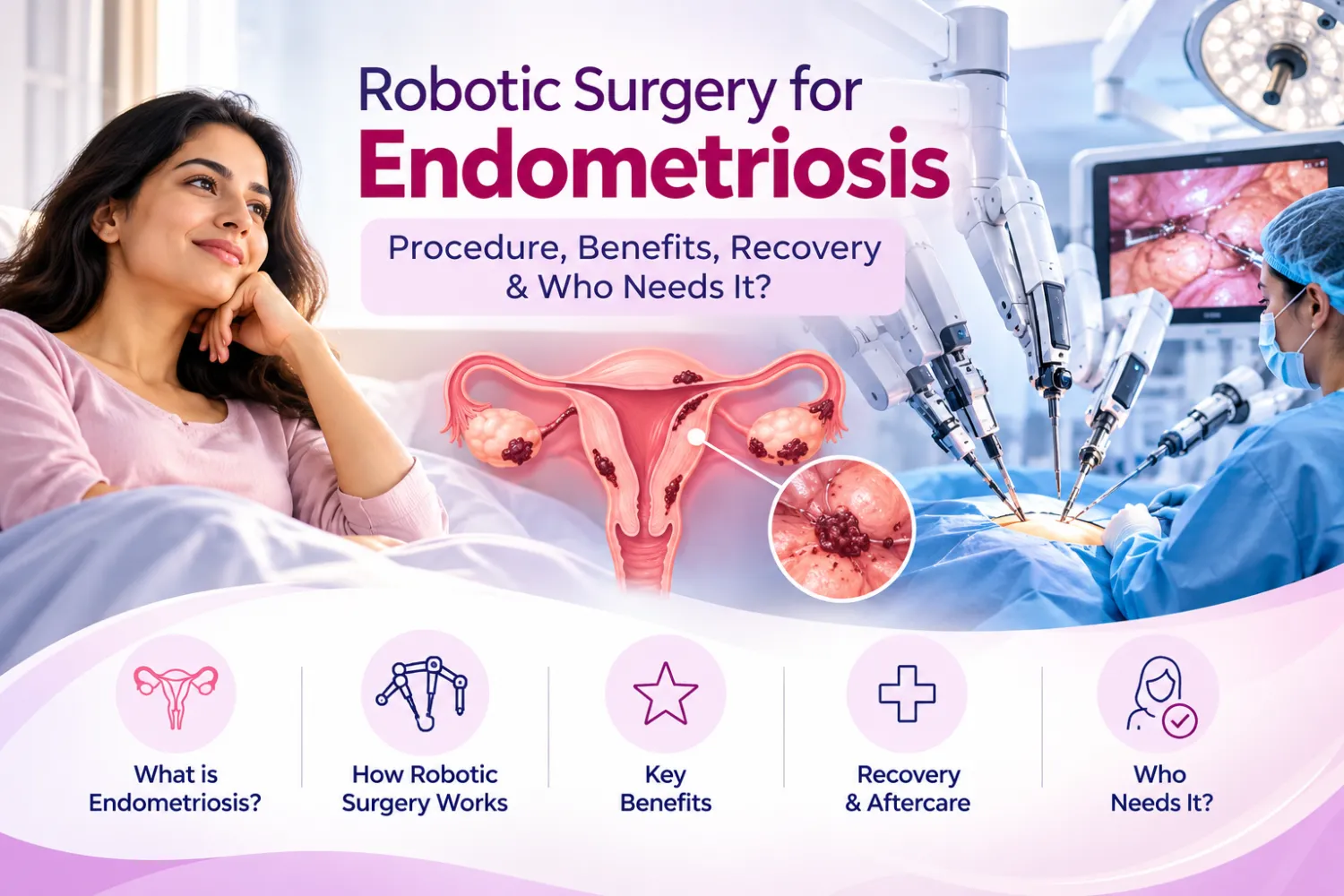
Posted By: Dr. Usha M Kumar on 25 Sep 2026
Endometriosis can be much more than painful periods. For some women, the condition causes persistent pelvic pain, pain during intercourse, bowel or bladder symptoms, difficulty conceiving, ovarian cysts and a significant impact on everyday life.
The challenge is that endometriosis does not behave in exactly the same way in every woman. In one patient, disease may be limited to relatively superficial areas of the pelvis. In another, it may involve the ovaries, pelvic sidewalls, tissue behind the uterus or structures close to the bowel, bladder and ureters.
This is why treatment cannot be based simply on whether a woman “has endometriosis.” The location and extent of disease, severity of symptoms, previous treatments, fertility plans, ovarian reserve and previous surgery all matter.
Medicines and hormonal treatments can be very effective for controlling symptoms in many women. Surgery is therefore not automatically required after an endometriosis diagnosis.
However, when surgery is appropriate, the objective should be carefully planned treatment of the disease while protecting healthy organs and, where relevant, reproductive potential.
Minimally invasive surgery—including conventional laparoscopy and, in selected situations, robot-assisted laparoscopy—can be used to treat endometriosis.
This article explains what robotic endometriosis surgery actually involves, who may be considered for surgery, how it differs from conventional laparoscopy, what recovery is like and what women should understand before deciding on treatment.
What Is Endometriosis?
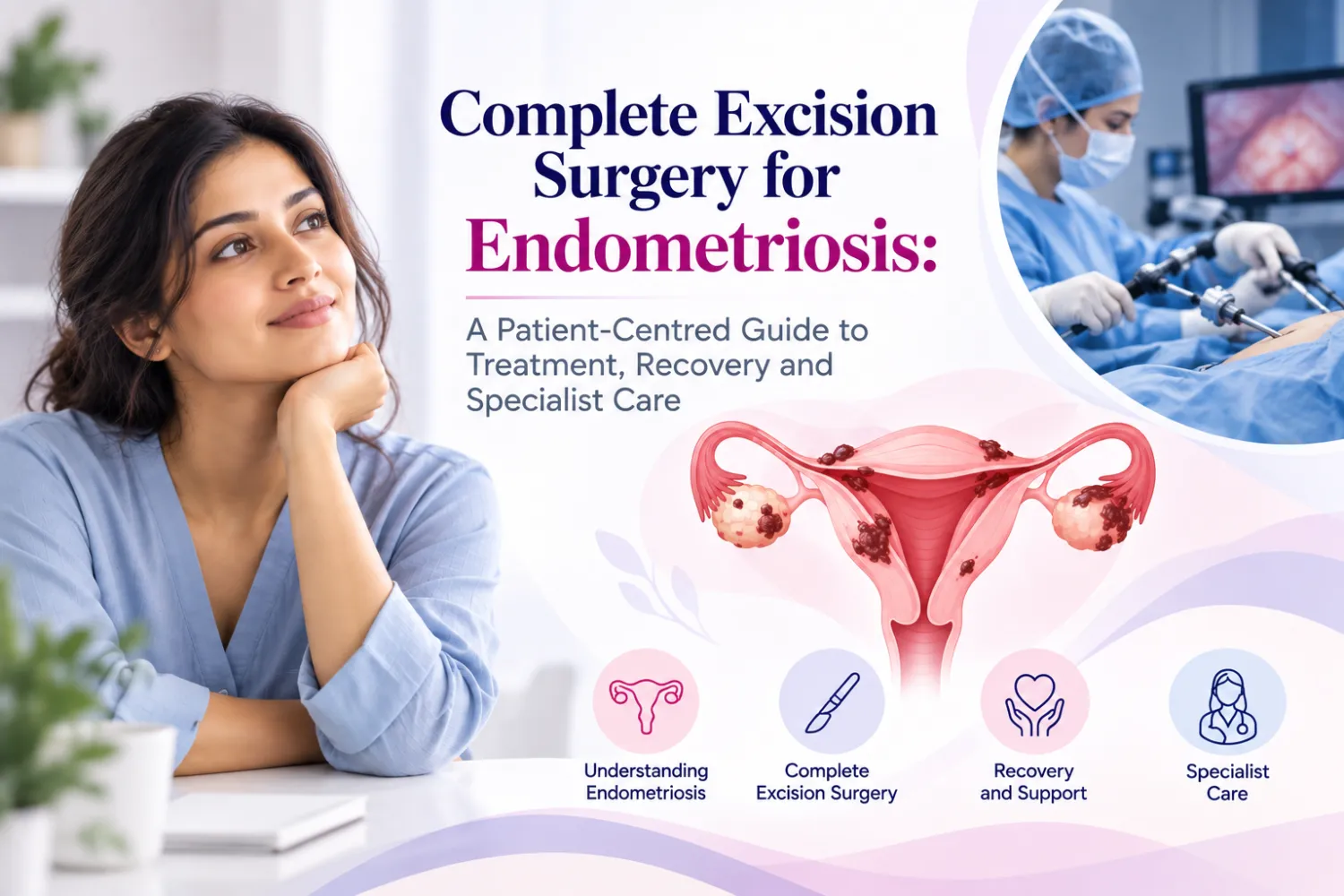
Endometriosis is a chronic condition in which tissue similar to the lining of the uterus is found outside the uterus.
It commonly affects areas such as:
- Ovaries
- Pelvic peritoneum
- Fallopian tubes
- Tissue behind the uterus
- Uterosacral ligaments
- Pelvic sidewalls
In more extensive disease, endometriosis can sometimes involve or lie close to the bowel, bladder, ureters and other pelvic structures.
The disease may also cause inflammation and scarring. Adhesions can develop between pelvic organs, changing their normal anatomy.
An ovarian endometrioma—sometimes called a “chocolate cyst”—is another manifestation of endometriosis in which an endometriosis-related cyst develops within an ovary.
The severity of symptoms does not always correspond to the apparent extent of disease. A woman with relatively limited disease can experience severe pain, while another with extensive endometriosis may have comparatively mild symptoms.
That is one reason treatment needs to be individualized.
What Symptoms Can Endometriosis Cause?
The presentation varies considerably.
Common symptoms include:
Severe period pain
Painful periods are common, but endometriosis-related menstrual pain may be severe enough to interfere with work, school, sleep or normal activities.
Chronic pelvic pain
Pain may occur outside menstruation and become persistent or recurrent.
Pain during or after intercourse
Deep pain during intercourse can occur when endometriosis affects structures deeper within the pelvis.
Painful bowel movements
Some women experience pain while passing stool, particularly around menstruation.
Urinary symptoms
Depending on disease location, urinary discomfort or cyclical bladder symptoms may occur.
Difficulty becoming pregnant
Endometriosis is associated with infertility in some women, although many women with endometriosis conceive naturally.
Ovarian cysts
An ultrasound or MRI performed for another reason may identify an ovarian endometrioma.
Symptoms such as pelvic pain or heavy periods are not specific to endometriosis. Adenomyosis, fibroids, ovarian cysts, pelvic infection and other conditions can produce overlapping symptoms.
A proper evaluation is therefore essential before attributing every symptom to endometriosis.
Does Every Woman With Endometriosis Need Surgery?
No.
This is one of the most important points for patients to understand.
Endometriosis treatment may include observation, pain-relieving medication, hormonal treatment, fertility treatment, surgery or a combination of approaches.
The appropriate option depends on factors including:
- Age
- Nature and severity of symptoms
- Effect on quality of life
- Location and extent of suspected disease
- Previous treatment
- Previous surgery
- Presence of an endometrioma
- Fertility plans
- Other infertility factors
- Ovarian reserve
- Individual preferences
Surgery is one treatment option for endometriosis-associated pain, but it should not be regarded as the automatic first treatment for every patient.
When May Endometriosis Surgery Be Considered?
Surgical treatment may be discussed in situations such as persistent or significant symptoms despite appropriate medical treatment, certain endometriomas, suspected deep endometriosis, anatomical distortion caused by adhesions, or when the overall clinical and fertility situation makes surgery appropriate.
The decision is particularly important for women who want future pregnancy.
Surgery on the ovary can potentially affect healthy ovarian tissue and ovarian reserve. Therefore, the presence of an ovarian endometrioma does not by itself mean that every patient should undergo immediate surgery.
The potential benefit of surgery needs to be weighed against its risks and the patient’s reproductive plans.
What Is Robotic Surgery for Endometriosis?
Robotic endometriosis surgery is a form of minimally invasive laparoscopic surgery.
Despite the name, a robot does not independently perform the operation.
The surgeon remains in control throughout the procedure.
Small abdominal incisions are made to introduce a camera and surgical instruments. The surgeon operates through a robotic surgical platform that translates the surgeon’s hand movements into movements of the instruments inside the patient’s abdomen.
The system can provide magnified three-dimensional visualization and articulated instruments capable of precise movement.
These features can be useful when operating in confined pelvic spaces or performing complex dissection.
However, robotic surgery is a surgical platform—not a separate treatment for endometriosis.
The fundamental objective remains the same: identify and appropriately treat disease while minimizing unnecessary injury to healthy structures.
Robotic Surgery vs Laparoscopic Surgery for Endometriosis
Patients frequently ask:
“Is robotic surgery better than laparoscopy for endometriosis?”
The answer requires some nuance.
Both are minimally invasive approaches.
Conventional laparoscopy
In laparoscopic surgery, the surgeon operates using long instruments introduced through small abdominal incisions while viewing the surgical field through a camera.
Robotic-assisted laparoscopy
In robotic surgery, similar small incisions are used, but the instruments are attached to a robotic surgical system controlled by the surgeon.
Robotic technology may offer technical features such as:
- Three-dimensional visualization
- Magnified surgical view
- Articulating instruments
- Improved range of instrument movement
- Tremor filtration
- Surgeon ergonomics
But these technical characteristics should not be confused with proof that robotic surgery produces better outcomes for every patient.
For benign gynaecological conditions, evidence has not established universal superiority of robotic surgery over conventional laparoscopy.
The more meaningful question is therefore not simply:
“Robot or laparoscopy?”
It is:
“What approach is most appropriate for this particular disease pattern, and who is performing the surgery?”
Surgeon experience, case selection, understanding of pelvic anatomy and experience in endometriosis surgery remain extremely important.
What Is Endometriosis Excision Surgery?
When surgery is undertaken, visible endometriosis may be treated through different surgical techniques.
One important concept is excision.
Excision means surgically removing an area of endometriosis rather than simply treating its surface.
Current international guidance recognizes surgery as an option for reducing endometriosis-associated pain and states that clinicians may consider excision rather than ablation when surgery is performed.
However, surgery should still be individualized.
The goal is not to perform the largest possible operation. The goal is to perform the operation that appropriately addresses the patient’s disease while protecting normal anatomy and function.
What Is Deep Endometriosis?
Deep endometriosis refers to disease that infiltrates beneath the surface of affected tissues.
It may involve areas such as:
- Uterosacral ligaments
- Rectovaginal region
- Pelvic sidewalls
- Bowel
- Bladder
- Ureters
Not every patient with deep endometriosis needs surgery.
But when an operation is indicated, careful preoperative mapping becomes particularly important because disease can lie close to structures responsible for bowel and urinary function.
Depending on the suspected organs involved, treatment may require multidisciplinary planning.
How Is Endometriosis Evaluated Before Surgery?
Good endometriosis surgery begins before the patient enters the operating theatre.
The evaluation starts with a detailed clinical history.
Questions may include:
- When does the pain occur?
- Is it linked to menstruation?
- Is intercourse painful?
- Are bowel movements painful?
- Are urinary symptoms cyclical?
- Has fertility been affected?
- Has the patient undergone previous pelvic surgery?
- Which medications have already been tried?
Imaging may then be used depending on the clinical situation.
Ultrasound
A specialist pelvic ultrasound can identify ovarian endometriomas and may identify features of deeper disease.
MRI
MRI can be useful in selected patients, particularly when mapping more extensive or deep pelvic endometriosis.
Imaging does not replace clinical judgment, and a normal scan does not necessarily exclude all forms of endometriosis.
What Happens During Robotic Endometriosis Surgery?
The exact operation varies according to disease distribution.
The procedure is usually performed under general anaesthesia.
After access to the abdomen is established, a camera and surgical instruments are introduced through small incisions.
The pelvis is systematically assessed.
The surgeon evaluates structures such as:
- Uterus
- Ovaries
- Fallopian tubes
- Pelvic sidewalls
- Areas behind the uterus
- Uterosacral ligaments
- Bowel surface
- Bladder region
- Ureters where relevant
Adhesions may be carefully released when appropriate.
Visible areas of endometriosis requiring surgical treatment are addressed according to their location and depth.
If an ovarian endometrioma is being treated, particular attention is required to preserve as much healthy ovarian tissue as reasonably possible.
If disease is suspected near the bowel, bladder or ureter, the operation may require more extensive dissection and, in selected cases, involvement of other surgical specialists.
Therefore, the phrase “endometriosis surgery” can describe procedures ranging from relatively limited treatment to highly complex pelvic surgery.
What Are the Potential Benefits of a Minimally Invasive Approach?
Compared with traditional open abdominal surgery, minimally invasive gynaecological surgery can offer advantages in appropriately selected patients, including:
- Smaller abdominal incisions
- Less postoperative pain in many patients
- Shorter hospital stay
- Faster recovery
- Smaller scars
- Earlier return to normal activity
These are advantages of minimally invasive surgery generally and should not be interpreted as proof that robotic surgery is always superior to conventional laparoscopy.
Can Robotic Surgery Improve Endometriosis Pain?
Surgery is recognized as one option for reducing endometriosis-associated pain.
Many patients undergo surgery because pain has become significant or has not been adequately controlled with other treatments.
However, no responsible surgeon should promise that surgery will permanently eliminate every form of pelvic pain.
Pelvic pain can have multiple contributors, and endometriosis is a chronic disease.
Some women may continue to experience symptoms after technically successful surgery, and recurrence of symptoms or disease is possible.
Postoperative treatment and follow-up therefore remain important.
Can Endometriosis Return After Surgery?
Yes.
Surgery should not be described as a guaranteed permanent cure for endometriosis.
Recurrence risk varies and can be influenced by factors such as disease pattern, age, residual disease, reproductive plans and postoperative management.
For women who are not immediately trying to conceive, postoperative hormonal treatment may be considered in appropriate circumstances to help control symptoms and reduce recurrence risk.
This should be individualized rather than automatically prescribed to every patient.
Robotic Endometriosis Surgery and Fertility
This is an area where careful counselling is particularly important.
Endometriosis can affect fertility through several mechanisms, including inflammation, adhesions, distortion of pelvic anatomy and ovarian involvement.
But surgery is not automatically the best fertility treatment for every woman with endometriosis.
Before recommending surgery primarily for fertility, factors such as the following should be considered:
- Patient’s age
- Duration of infertility
- Ovarian reserve
- Previous ovarian surgery
- Presence and size of endometriomas
- Fallopian tube status
- Semen parameters of the male partner
- Other infertility factors
- Possibility of natural conception
- Potential role of assisted reproductive treatment
International guidance emphasizes that decisions about surgery in endometriosis-associated infertility should take these factors into account.
For women with ovarian endometriomas, repeated ovarian surgery requires particular caution because surgery may affect ovarian reserve.
Can Pregnancy Occur After Endometriosis Surgery?
Yes, pregnancy can occur naturally after endometriosis surgery in some women.
But it is not possible to provide one universal “pregnancy success rate” that applies to every patient.
A 25-year-old woman with limited disease and normal ovarian reserve has a very different fertility profile from a 38-year-old woman with bilateral ovarian endometriomas and previous ovarian surgery.
That is why fertility planning should be incorporated into the treatment discussion before—not after—surgery.
Does Robotic Surgery Protect Fertility Better Than Laparoscopy?
There is not enough evidence to state that robotic surgery universally protects fertility better than conventional laparoscopy.
Technology can assist a surgeon, but outcomes depend on many factors, including disease complexity, surgical technique, ovarian involvement and surgeon experience.
For women who wish to preserve fertility, the important principle is fertility-conscious surgical planning.
Recovery After Robotic Endometriosis Surgery
Recovery varies significantly according to the extent of the operation.
A relatively limited procedure cannot be compared with extensive surgery involving deep endometriosis and multiple pelvic structures.
After surgery, patients may initially experience:
- Abdominal discomfort
- Bloating
- Fatigue
- Mild vaginal bleeding
- Shoulder-tip discomfort related to gas used during laparoscopy
- Temporary changes in bowel movements
Walking is usually encouraged as part of postoperative recovery when medically appropriate.
The timing of return to work, exercise, driving and sexual activity should be discussed with the treating surgeon.
Patients should avoid using another person’s recovery timeline as their own benchmark.
How Long Is the Hospital Stay?
Hospital stay depends on the complexity of surgery, medical condition of the patient, pain control, ability to eat and walk, urinary function and whether additional procedures were required.
Some minimally invasive procedures allow discharge relatively quickly, while more extensive operations require longer observation or hospitalization.
The operative plan—not merely the word “robotic”—is what largely determines recovery.
What Are the Risks of Robotic Endometriosis Surgery?
Every operation carries risk.
Potential complications of minimally invasive pelvic surgery can include:
- Bleeding
- Infection
- Anaesthetic complications
- Injury to blood vessels
- Injury to bowel
- Injury to bladder
- Injury to ureters
- Blood clots
- Hernia at an incision site
- Need for additional surgery
- Conversion to open surgery in certain circumstances
The specific risk profile varies according to disease severity and the procedure being performed.
Complex deep endometriosis surgery may have a different risk profile from treatment of superficial disease.
Patients should therefore discuss their individual risks with their surgeon rather than relying on generic percentages found online.
Is Robotic Surgery More Precise?
Robotic systems provide technical features that can facilitate precise movements and visualization.
However, describing robotic surgery simply as “more precise” can be misleading if it implies guaranteed better clinical outcomes.
The technology does not replace surgical judgment.
The surgeon must still identify disease correctly, understand anatomy, decide what should and should not be removed and manage unexpected findings.
For patients, surgical expertise is at least as important as the equipment used.
Who May Be Considered for Robotic Endometriosis Surgery?
Robotic surgery may be considered in selected patients when minimally invasive surgical treatment has been recommended and the operating surgeon believes the robotic approach is appropriate for the planned procedure.
Examples may include certain cases involving:
- Significant pelvic adhesions
- Deep pelvic disease
- Endometriomas
- Distorted pelvic anatomy
- Previous surgery
- Disease requiring complex suturing or dissection
This does not mean every complex case must be robotic or every simple case should be laparoscopic.
The approach should be selected according to the patient, disease and surgeon’s expertise.
Who May Not Need Surgery?
A woman may not require immediate surgery when symptoms are adequately controlled, disease can be managed medically, an ovarian cyst can appropriately be monitored, or when fertility planning suggests another treatment pathway.
Similarly, finding endometriosis incidentally does not automatically mean it needs to be surgically removed.
Treatment should be driven by the clinical situation rather than the scan report alone.
Questions to Ask Before Endometriosis Surgery
Patients considering surgery should feel comfortable asking their surgeon:
What is the objective of my surgery?
Pain relief, fertility, treatment of an endometrioma and management of deep disease are not identical objectives.
Do you suspect deep endometriosis?
This can affect imaging, counselling and surgical planning.
Could my bowel, bladder or ureter be involved?
If so, ask whether additional specialists might be required.
How could surgery affect my ovarian reserve?
This is particularly relevant when the ovaries are involved.
Why are you recommending robotic surgery rather than conventional laparoscopy?
There should be a clinical or technical rationale rather than simply availability of the technology.
What happens if the disease is more extensive than expected?
The consent process should address this possibility.
What is the plan if I want pregnancy?
Fertility goals should form part of the treatment plan.
Choosing an Endometriosis Surgeon in Delhi
Women searching for an endometriosis surgeon in Delhi, robotic gynaecologist in Delhi or laparoscopic endometriosis surgeon should look beyond a list of technologies.
Important considerations include experience in minimally invasive gynaecological surgery, experience managing different patterns of endometriosis, ability to interpret symptoms and imaging together, fertility-conscious decision-making and access to multidisciplinary care when complex disease involves other organs.
Most importantly, the surgeon should be willing to explain why surgery is—or is not—appropriate.
Sometimes the best surgical decision is to operate.
Sometimes it is to wait, use medical therapy, pursue fertility treatment or obtain additional imaging.
Good endometriosis care is based on selecting the right treatment rather than performing the maximum treatment.
About Dr Usha M Kumar
Dr Usha M Kumar is a senior gynaecologist with extensive experience in minimally invasive and advanced gynaecological surgery in Delhi.
Her areas of clinical interest include laparoscopic and robotic gynaecological surgery and the management of conditions such as endometriosis, ovarian cysts, uterine fibroids and other complex gynaecological problems.
For women experiencing persistent pelvic pain, severe menstrual pain, suspected endometriosis, endometriomas or fertility concerns associated with endometriosis, a detailed consultation can help determine whether medical treatment, observation, fertility planning or surgery is the appropriate next step.
Frequently Asked Questions
Is robotic surgery the best treatment for endometriosis?
Not necessarily. Endometriosis can be managed with medication, hormonal treatment, surgery, fertility treatment or combinations of these approaches. Robotic surgery is one surgical option for selected patients.
Is robotic endometriosis surgery better than laparoscopy?
Robotic surgery is itself a form of minimally invasive laparoscopic surgery. Current evidence does not establish robotic surgery as universally superior to conventional laparoscopy for benign gynaecological conditions.
Can endometriosis be permanently cured by robotic surgery?
Surgery can treat existing areas of disease and may improve symptoms, but endometriosis is a chronic condition and recurrence can occur.
Is endometriosis excision better than burning the disease?
When surgery is performed, international guidance states that clinicians may consider excision rather than ablation for reducing endometriosis-associated pain. The appropriate technique nevertheless depends on disease location and the individual patient.
Can I get pregnant after robotic endometriosis surgery?
Pregnancy is possible after endometriosis surgery, but fertility depends on multiple factors including age, ovarian reserve, fallopian tube status, disease severity, previous surgery and other causes of infertility.
Does every ovarian endometrioma require surgery?
No. The decision depends on symptoms, cyst characteristics, age, ovarian reserve, fertility plans, previous treatment and other clinical factors.
How long does robotic endometriosis surgery take?
There is no standard duration. Operating time depends on disease location, adhesions, previous surgery and whether structures such as the bowel, bladder or ureters are involved.
How quickly can I return to work?
Recovery depends on the extent of surgery and the nature of your work. Your surgeon should provide individualized advice after the procedure.
Can endometriosis affect the bowel and bladder?
Yes. Deep endometriosis can sometimes involve or lie close to the bowel, bladder or ureters. Such cases may require detailed imaging and multidisciplinary surgical planning.
Should I see an endometriosis specialist before IVF?
Women with known or suspected endometriosis and infertility may benefit from coordinated evaluation by gynaecology and fertility specialists. Surgery before IVF is not automatically required for every woman.
Final Takeaway
Robotic technology has expanded the options available for minimally invasive gynaecological surgery, including surgery for endometriosis. But technology should never become the reason for performing an operation.
The central questions remain:
Does this patient actually need surgery? What is the objective of surgery? Where is the disease located? How can healthy organs and fertility be protected? And which surgical approach is most appropriate for her particular case?
For some women, the answer may be robotic-assisted surgery. For others, conventional laparoscopy, medical treatment, fertility treatment or observation may be more appropriate.
Endometriosis care works best when the treatment is tailored to the woman rather than the woman being fitted to a particular treatment.