




Posted By: Dr. Usha M Kumar on 15 Nov 2026
Endometriosis is commonly associated with painful menstruation and infertility. However, in some women, the condition affects organs beyond the reproductive system, including the bowel, bladder and ureters.
These forms of endometriosis can be difficult to recognise because their symptoms frequently resemble gastrointestinal or urinary disorders.
Women may undergo repeated investigations for irritable bowel syndrome, recurrent urinary symptoms or unexplained abdominal discomfort before endometriosis is considered.
When the bowel or urinary tract is involved, accurate diagnosis becomes particularly important because certain lesions can interfere with normal organ function.
What Is Bowel Endometriosis?
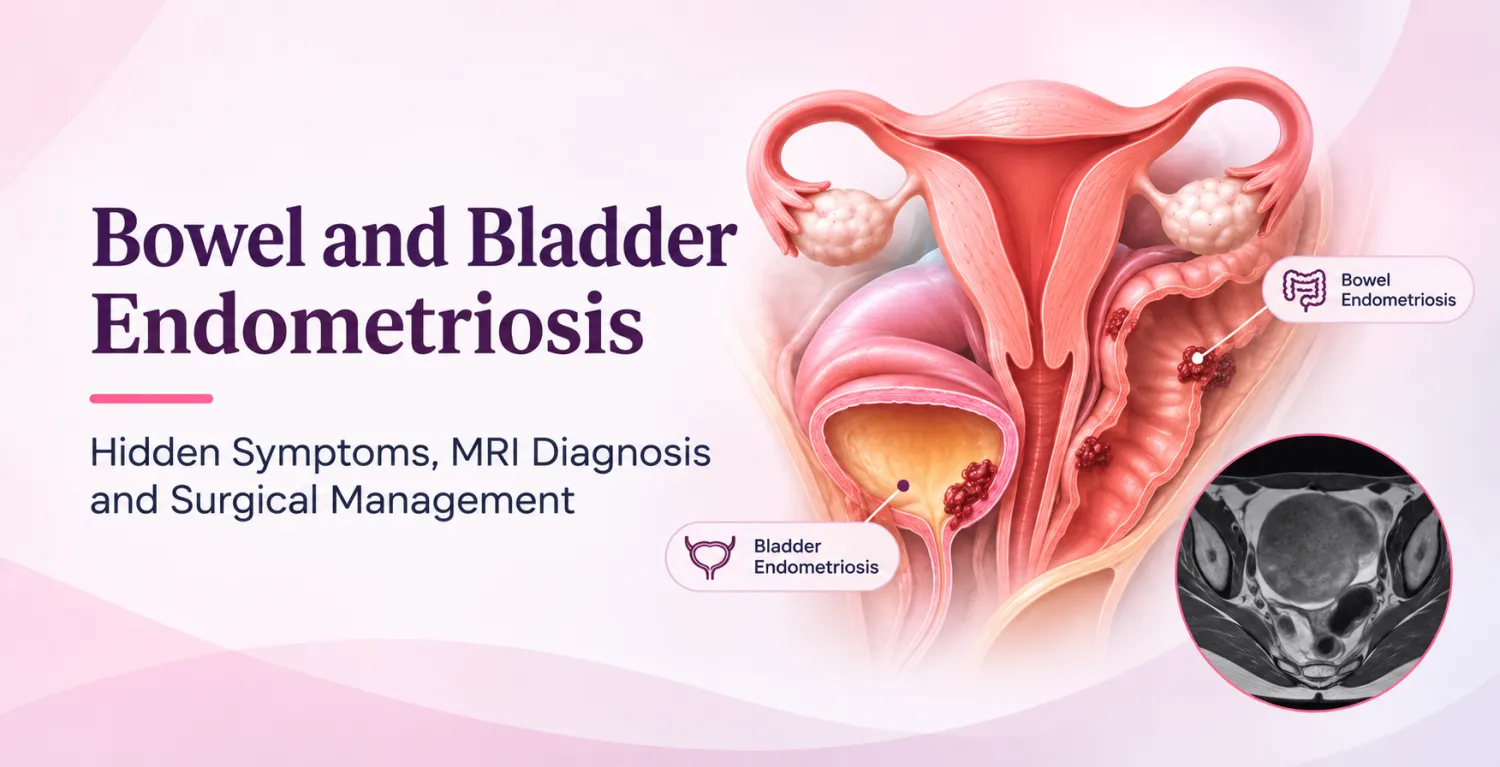
Bowel endometriosis occurs when endometriotic tissue affects the intestinal wall or surrounding bowel structures.
It most frequently involves the rectum or sigmoid colon, although other intestinal segments may be affected.
Lesions can cause inflammation, fibrosis and thickening of the bowel wall.
In more extensive cases, the bowel lumen may become narrowed.
The degree of bowel involvement varies, and not every patient with bowel endometriosis requires surgery.
Symptoms of Bowel Endometriosis
Possible symptoms include:
- Pain during bowel movements
- Constipation
- Diarrhoea
- Abdominal bloating
- Deep pelvic pain
- Pain during menstruation
- A sensation of incomplete bowel emptying
- Occasional cyclical rectal bleeding
Symptoms may worsen around menstruation, although they can also occur at other times.
Bowel endometriosis may coexist with irritable bowel syndrome or other gastrointestinal conditions.
Rectal bleeding should not automatically be attributed to endometriosis. Appropriate evaluation is needed to exclude other causes.
What Is Bladder Endometriosis?
Bladder endometriosis occurs when endometriotic lesions involve the bladder wall.
Symptoms may include urinary frequency, discomfort during urination, pelvic pressure and pain associated with bladder filling.
Some women experience blood in the urine around menstruation.
However, these symptoms can also occur with urinary tract infections, bladder pain syndrome and other conditions.
Clinical assessment is necessary to distinguish between them.
Ureteric Endometriosis: A Potentially Serious Complication
The ureters are tubes that carry urine from the kidneys to the bladder.
Deep endometriosis may affect the ureters directly or compress them through surrounding fibrosis.
This can obstruct urine drainage and cause hydronephrosis, or swelling of the kidney.
A particularly important feature is that ureteric obstruction may occur without severe pain.
Untreated obstruction can threaten kidney function.
Suspected ureteric involvement therefore requires timely assessment of the urinary tract, kidney function and appropriate imaging.
Why Bowel and Bladder Endometriosis Is Difficult to Diagnose
Symptoms frequently overlap with non-gynecological conditions.
For example, bowel endometriosis may produce constipation and bloating similar to irritable bowel syndrome.
Bladder endometriosis may resemble recurrent cystitis.
A detailed history should examine whether symptoms follow a menstrual pattern, coexist with pelvic pain or occur alongside other features of endometriosis.
Nevertheless, a cyclical pattern is not essential for diagnosis.
Role of MRI in Bowel and Bladder Endometriosis
Pelvic MRI can be particularly useful when deep disease is suspected.
It may help identify:
- Deep pelvic nodules
- Rectosigmoid bowel involvement
- Bladder wall lesions
- Fibrosis and anatomical distortion
- Associated ovarian endometriomas
- Possible involvement of nearby structures
MRI findings can support preoperative planning, especially when multidisciplinary surgery may be necessary.
However, diagnostic accuracy depends on the imaging protocol, disease characteristics and specialist interpretation.
A normal MRI does not exclude all endometriosis.
Can Ultrasound Detect Bowel Endometriosis?
Specialist transvaginal ultrasound can identify many forms of rectosigmoid and deep pelvic endometriosis.
A systematic examination may assess bowel nodules, ovarian mobility and signs of posterior compartment adhesions.
Ultrasound and MRI can provide complementary information.
The choice of investigation depends on symptoms, clinical findings and available expertise.
Treatment Options for Bowel Endometriosis
Treatment is individualised according to symptoms, disease extent, bowel function and reproductive goals.
Medical management
Hormonal treatment may reduce pain and other symptoms in suitable patients.
Medical management is often considered when there is no significant obstruction or other urgent complication.
Bowel shaving
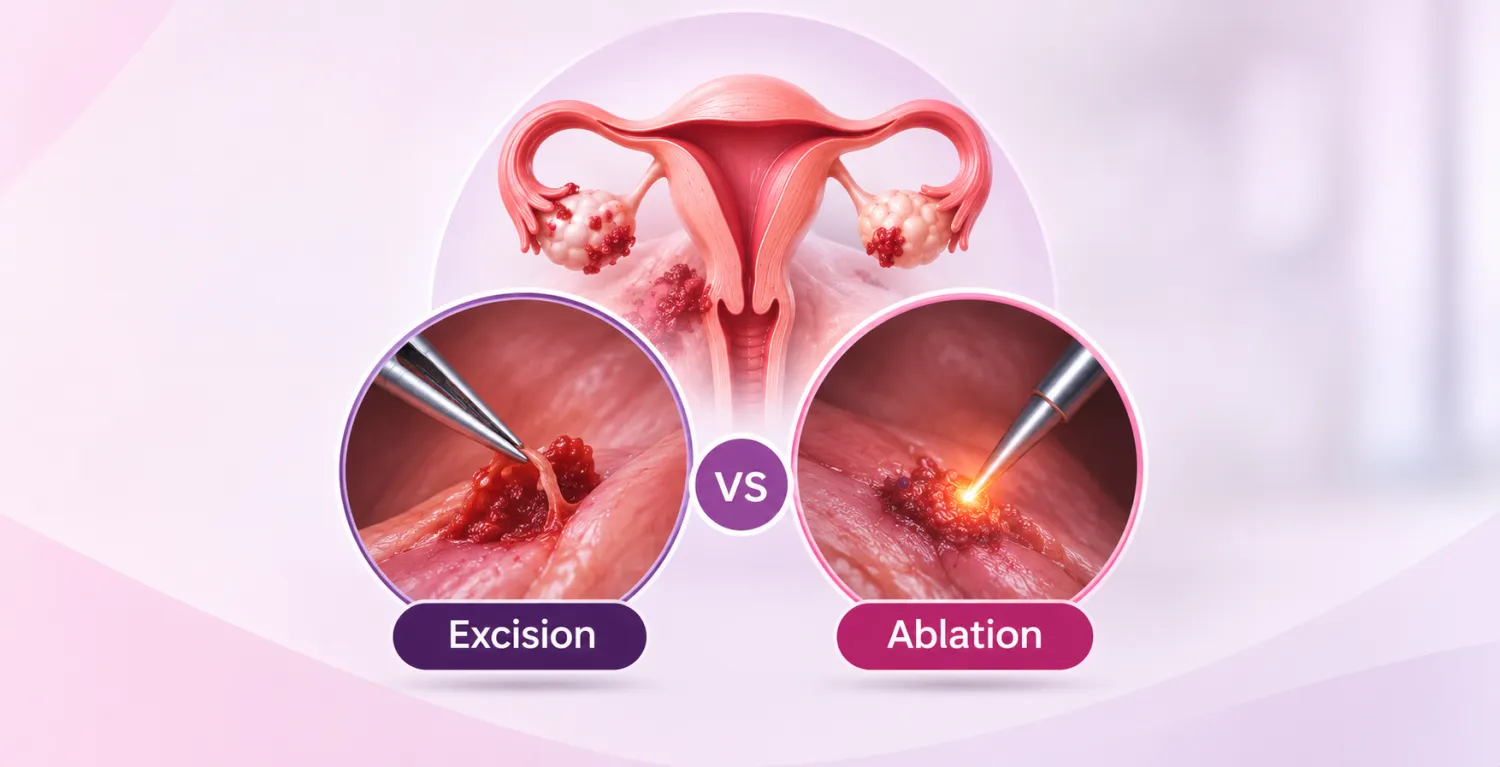
In selected cases, the surgeon may remove endometriotic tissue from the bowel surface while preserving the deeper bowel wall.
Discoid excision
This involves removing a localised full-thickness section of the bowel wall and repairing the defect.
Segmental bowel resection
A section of bowel may be removed when disease is extensive, involves multiple lesions or produces significant narrowing.
The bowel ends are then reconnected when appropriate.
The choice between these techniques depends on anatomical findings and the balance between complete treatment and surgical risk.
Potential complications can include leakage from bowel repairs, infection, altered bowel function and other postoperative problems.
For this reason, bowel surgery should involve appropriate specialist expertise and informed consent.
Treatment of Bladder and Ureteric Endometriosis
Bladder endometriosis may be managed medically or surgically, depending on symptoms and lesion characteristics.
Selected cases may require excision of affected bladder tissue and surgical repair.
Ureteric disease may require procedures ranging from releasing surrounding fibrotic tissue to more extensive reconstructive surgery.
Urological involvement is particularly important when obstruction or kidney function is a concern.
Is Robotic Surgery Useful for Complex Endometriosis?
Robotic-assisted surgery may facilitate certain complex pelvic dissections through three-dimensional visualisation and articulated instruments.
However, robotic surgery is not necessary for every case and has not demonstrated universal superiority over expert laparoscopy.
The experience of the surgical team and availability of colorectal or urological support are critical considerations.
When Should You Seek Urgent Medical Care?
Persistent vomiting, severe abdominal distension, inability to pass stool or gas, severe flank pain, fever with urinary symptoms or reduced urine output may indicate a complication requiring urgent assessment.
These symptoms should not be managed solely through a routine endometriosis appointment.
Frequently Asked Questions
Can bowel endometriosis be mistaken for IBS?
Yes. Symptoms overlap, and both conditions may coexist.
Can bowel endometriosis be seen on colonoscopy?
Often not. Many endometriotic lesions affect the outer or muscular layers of the bowel rather than the inner lining examined during colonoscopy.
Does bowel endometriosis always require bowel resection?
No. Medical treatment or less extensive surgical techniques may be appropriate depending on the disease.
Can bladder endometriosis cause blood in urine?
Yes, although other urinary conditions must be excluded.
Can ureteric endometriosis damage the kidneys?
Yes. Ureteric obstruction can impair kidney function and may occur with limited symptoms.
Conclusion
Bowel and bladder endometriosis require careful evaluation because symptoms can be misleading and some forms of disease may threaten organ function.
Specialist imaging, individualised treatment and multidisciplinary planning are particularly important in complex cases.
Women searching for a bowel endometriosis specialist in India can consult Dr. Usha M. Kumar in Delhi for gynecological assessment and discussion of appropriate diagnostic and surgical pathways.