




Posted By: Dr. Usha M Kumar on 29 Sep 2026
For many women, endometriosis begins with something that seems almost normal—painful periods.
Over time, however, the pain may become harder to ignore. Periods may start interfering with work or daily activities. Intercourse may become painful. Some women develop persistent pelvic pain, bowel or urinary symptoms, ovarian cysts or difficulty becoming pregnant.
At this stage, one of the most common questions is:
“Do I need surgery for endometriosis?”
The answer is not automatically yes.
Many women with endometriosis can be managed successfully with medicines, hormonal treatment or fertility treatment. Surgery becomes an option when symptoms, disease pattern, fertility considerations or other clinical factors make an operation appropriate.
When surgery is recommended, laparoscopic endometriosis excision surgery is one of the minimally invasive approaches that may be considered.
But endometriosis surgery is not simply about “removing spots.”
Endometriosis can affect different organs, distort normal pelvic anatomy and form adhesions. In some patients, disease may lie close to the bowel, bladder, ureters, ovaries and important blood vessels.
The aim of good endometriosis surgery is therefore not to remove as much tissue as possible. It is to appropriately treat disease while preserving healthy anatomy and, where relevant, fertility.
This guide explains what laparoscopic endometriosis excision surgery involves, who may need it, what happens during surgery, its relationship with fertility, possible risks, recovery and what patients should know before deciding on treatment.
What Is Endometriosis?
Endometriosis is a chronic condition in which tissue similar to the lining of the uterus grows outside the uterus.
Common sites include:
- Ovaries
- Pelvic peritoneum
- Fallopian tubes
- Uterosacral ligaments
- Pelvic sidewalls
- Area behind the uterus
In more extensive disease, endometriosis may involve or lie close to the bowel, bladder and ureters.
Endometriosis can cause inflammation, scarring and adhesions. These adhesions can cause pelvic structures that would normally move freely to become stuck together.
Some women also develop ovarian endometriomas, commonly referred to as chocolate cysts.
The disease varies considerably from one woman to another. The amount of visible disease also does not always correspond directly with the amount of pain a woman experiences.
This is one reason why treatment should be based on the patient rather than simply on the stage of endometriosis.
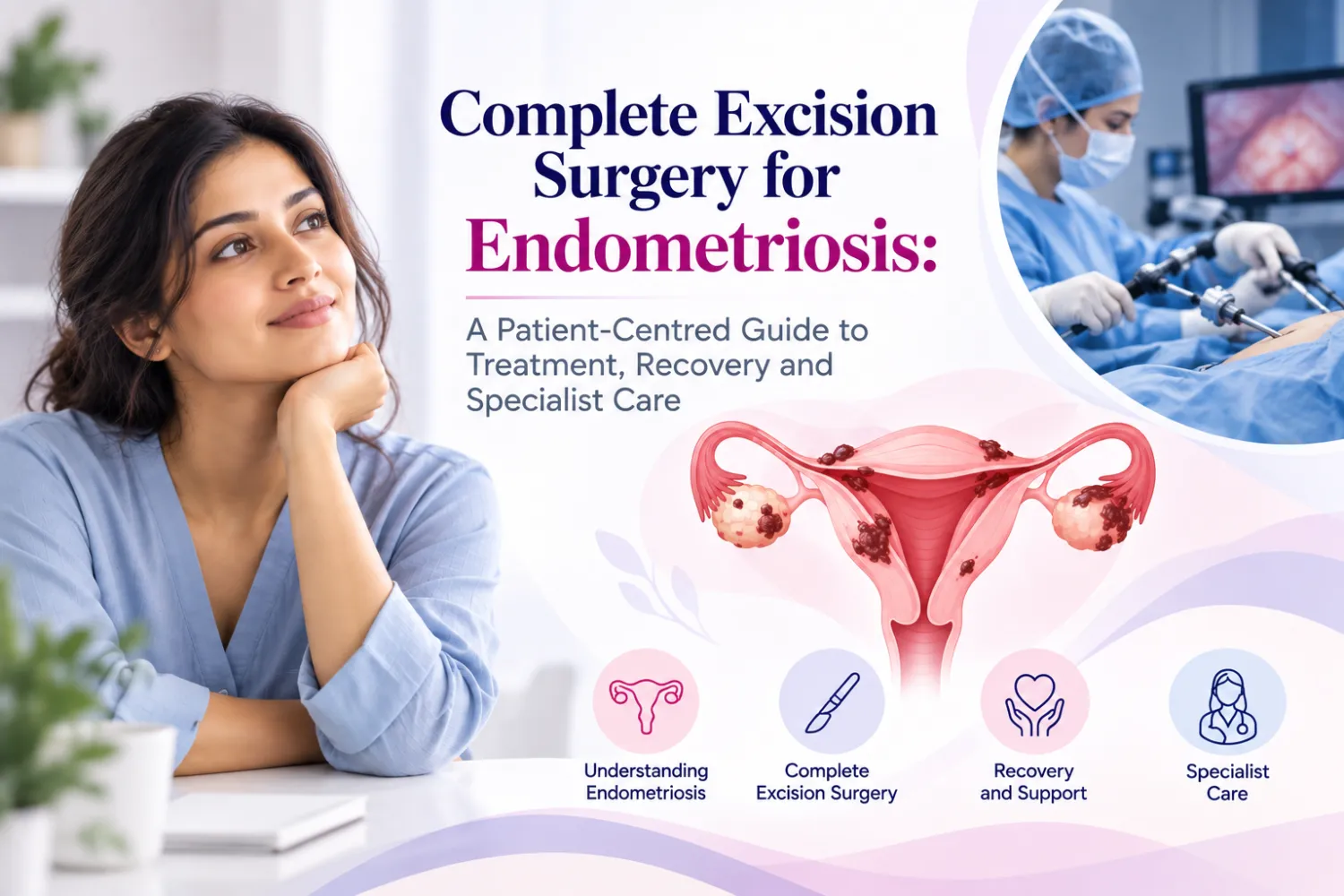
What Is Laparoscopic Endometriosis Surgery?
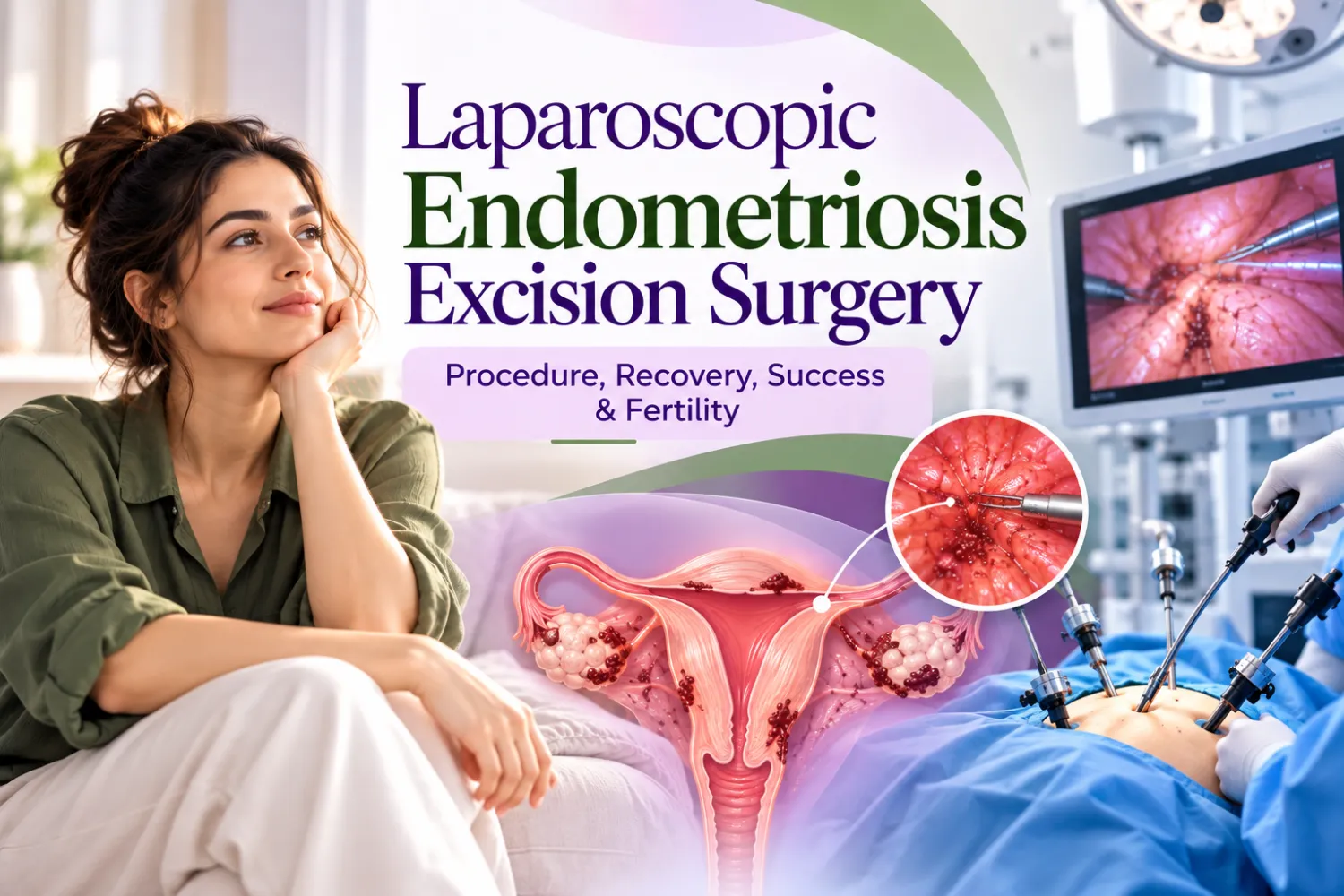
Laparoscopy is a minimally invasive surgical technique.
Instead of making one large abdominal incision, the surgeon operates through several small incisions.
A laparoscope—a thin telescope connected to a camera—is inserted into the abdomen. The camera provides a magnified view of the pelvis on a monitor.
Additional small instruments are inserted through other incisions.
This allows the surgeon to examine structures such as the uterus, ovaries, fallopian tubes, pelvic sidewalls and areas behind the uterus.
When appropriate, endometriosis can then be surgically treated during the same procedure.
What Does “Excision” of Endometriosis Mean?
Patients frequently encounter the terms excision and ablation when researching endometriosis surgery.
They are not exactly the same.
Endometriosis excision
Excision means surgically cutting out an area of endometriosis.
Endometriosis ablation
Ablation involves destroying or treating endometriosis using an energy source rather than physically excising the entire visible lesion.
International endometriosis guidance recognizes surgery as an option for reducing endometriosis-associated pain and states that clinicians may consider excision rather than ablation when surgery is performed.
However, this should not be interpreted as meaning that every visible abnormality must be aggressively removed.
The appropriate technique depends on:
- Disease location
- Depth of disease
- Organs involved
- Symptoms
- Fertility goals
- Previous surgery
- Surgical risk
Endometriosis surgery should therefore be planned rather than treated as a standard procedure performed identically in every patient.
Does Every Patient With Endometriosis Need Excision Surgery?
No.
This is particularly important because many patients find information online suggesting that surgery is the only effective treatment for endometriosis.
That is not correct.
Management options can include:
- Observation
- Pain medication
- Hormonal treatment
- Fertility treatment
- Surgery
- A combination of approaches
For a woman whose symptoms are well controlled with medication and who has no other indication for surgery, an operation may not be necessary.
Similarly, the presence of an ovarian endometrioma does not automatically mean immediate surgery is required.
The benefits and risks must be considered individually.
When May Laparoscopic Endometriosis Surgery Be Considered?
Surgery may be discussed when endometriosis is significantly affecting quality of life or when the clinical situation suggests a potential benefit from surgical treatment.
Examples can include:
Persistent pelvic pain
Some women continue to experience significant symptoms despite appropriate medical management.
Severe painful periods
When menstrual pain is substantial and other treatments have not provided adequate relief, surgery may be considered.
Deep endometriosis
Deep disease affecting pelvic structures can sometimes require surgical treatment, particularly when symptoms are significant.
Endometrioma
Certain ovarian endometriomas may require surgery depending on symptoms, size, appearance, fertility plans and other factors.
Pelvic adhesions
Endometriosis can cause organs to become adherent to one another, distorting pelvic anatomy.
Fertility-related situations
Surgery may be considered in selected women experiencing infertility, although it is not automatically the best option for every patient trying to conceive.
What Is Deep Endometriosis?
Some endometriosis remains relatively superficial.
In other patients, lesions extend more deeply into the affected tissues. This is known as deep endometriosis.
Potential sites include:
- Uterosacral ligaments
- Rectovaginal region
- Pelvic sidewalls
- Bowel
- Bladder
- Ureters
These cases require particularly careful evaluation.
For example, a woman who experiences severe pain during bowel movements around menstruation may require assessment for possible disease near the bowel.
Similarly, cyclical urinary symptoms can sometimes warrant evaluation of the urinary tract.
Deep endometriosis does not automatically require surgery, but when surgery is indicated, accurate preoperative mapping becomes particularly important.
How Is Endometriosis Diagnosed Before Surgery?
Diagnosis usually begins with a detailed history.
The pattern of symptoms can provide important clues.
A consultation may explore:
- Severity of menstrual pain
- Pelvic pain outside periods
- Pain during intercourse
- Pain while passing stool
- Urinary symptoms
- Fertility history
- Previous pregnancies
- Previous pelvic surgery
- Previous endometriosis treatment
- Family history
Imaging may then be recommended.
Pelvic ultrasound
Ultrasound can identify ovarian endometriomas and other gynaecological conditions such as fibroids and ovarian cysts.
Specialist ultrasound may also identify some forms of deep endometriosis.
MRI for endometriosis
MRI may be useful in selected patients, particularly when deep endometriosis is suspected or when detailed mapping could influence surgical planning.
Importantly, normal imaging does not necessarily exclude every form of endometriosis.
Clinical assessment remains important.
What Happens During Laparoscopic Endometriosis Excision Surgery?
The procedure is normally performed under general anaesthesia.
Small incisions are made in the abdomen, allowing the camera and surgical instruments to be introduced.
The surgeon first evaluates the pelvis systematically.
This may include examination of:
- Uterus
- Both ovaries
- Fallopian tubes
- Pelvic peritoneum
- Pelvic sidewalls
- Uterosacral ligaments
- Area behind the uterus
- Bowel surface
- Bladder region
- Ureters when relevant
The exact procedure then depends on what is found.
Visible disease that requires treatment may be carefully excised.
Adhesions may be released when necessary to restore anatomy.
If an ovarian endometrioma is present and surgery is appropriate, the cyst may be treated while attempting to preserve healthy ovarian tissue.
In deep disease, more complex dissection may be necessary.
This explains why two patients who both undergo “laparoscopic endometriosis surgery” can have very different operations and very different recovery periods.
What Happens When Endometriosis Affects the Ovary?
Endometriosis involving the ovary can result in an endometrioma.
Surgery in this situation requires particular care.
The ovary contains follicles that contribute to ovarian reserve. Surgical treatment of an endometrioma can inadvertently remove or damage some healthy ovarian tissue.
For women who want future pregnancy, this becomes an important part of surgical decision-making.
Factors that may be considered include:
- Patient’s age
- Symptoms
- Size of endometrioma
- Whether one or both ovaries are affected
- Previous ovarian surgery
- Ovarian reserve
- Fertility plans
- Suspicion regarding the nature of the cyst
Repeated ovarian surgery deserves particular caution because of its potential impact on ovarian reserve.
Can Endometriosis Surgery Improve Fertility?
This is one of the most frequently asked questions.
The relationship between endometriosis surgery and fertility is complicated.
In selected women with certain forms of endometriosis, surgery may improve the possibility of natural conception.
However, this does not mean every woman with endometriosis-associated infertility should undergo surgery before fertility treatment.
The decision should consider:
- Age
- Ovarian reserve
- Duration of infertility
- Disease severity
- Previous surgery
- Fallopian tube status
- Partner’s semen analysis
- Presence of other fertility factors
- Whether IVF may be required
For example, the strategy for a 27-year-old woman with good ovarian reserve and relatively limited disease may be very different from that for a 39-year-old woman with reduced ovarian reserve and previous ovarian surgery.
The diagnosis may be the same.
The appropriate treatment may not be.
Should Endometriosis Be Removed Before IVF?
Not routinely in every patient.
Surgery before assisted reproductive treatment should have a clear indication.
Operating simply because endometriosis is present can expose a woman to surgical risks without necessarily improving her fertility outcome.
This is particularly relevant for ovarian endometriomas because surgery may affect ovarian reserve.
If IVF is being considered, the gynaecologist and fertility specialist should ideally plan treatment together.
Can Natural Pregnancy Occur After Endometriosis Surgery?
Yes.
Some women conceive naturally following surgical treatment.
However, no single pregnancy rate can accurately be quoted for every patient.
Fertility after surgery depends on many variables, including:
- Age
- Ovarian reserve
- Tubal function
- Severity of endometriosis
- Male fertility
- Duration of infertility
- Previous operations
- Other reproductive conditions
Therefore, claims such as “endometriosis surgery guarantees pregnancy” should be viewed with caution.
Surgery may be one component of fertility management—not a guarantee of conception.
Does Endometriosis Excision Improve Pain?
Surgery is one recognized option for reducing endometriosis-associated pain.
Some women experience significant improvement following appropriate surgery.
But surgery cannot guarantee that all pelvic pain will disappear permanently.
Pelvic pain can have multiple causes.
A patient may have endometriosis along with:
- Adenomyosis
- Pelvic floor dysfunction
- Bladder pain
- Bowel disorders
- Musculoskeletal pain
- Neuropathic pain
If pain persists after surgery, it does not necessarily mean the operation has “failed.”
The complete clinical picture needs to be reassessed.
Can Endometriosis Return After Excision Surgery?
Yes.
Endometriosis is a chronic disease.
Even after apparently complete treatment of visible disease, symptoms or lesions can recur.
The likelihood varies among patients.
For women who are not immediately planning pregnancy, postoperative hormonal therapy may be considered in appropriate circumstances to help manage symptoms and reduce recurrence.
Follow-up therefore remains important after surgery.
What Are the Advantages of Laparoscopic Endometriosis Surgery?
When surgery is appropriate and can be performed minimally invasively, potential advantages compared with traditional open abdominal surgery can include:
- Smaller incisions
- Less postoperative discomfort in many patients
- Shorter hospital stay
- Faster recovery
- Smaller scars
- Earlier return to normal activity
However, “keyhole surgery” should not be confused with “minor surgery.”
Complex laparoscopic endometriosis surgery can involve meticulous dissection around important pelvic structures.
The size of the skin incision does not necessarily indicate the complexity of the operation occurring inside the pelvis.
How Long Does Laparoscopic Endometriosis Surgery Take?
There is no meaningful single answer.
A relatively straightforward operation involving limited disease may take much less time than surgery for severe adhesions or deep endometriosis involving several pelvic compartments.
Operating time may be influenced by:
- Extent of disease
- Previous operations
- Adhesions
- Ovarian involvement
- Bowel involvement
- Bladder involvement
- Ureteric involvement
- Complexity of reconstruction
Patients should therefore be cautious about comparing their expected surgery with someone else’s experience.
Recovery After Laparoscopic Endometriosis Surgery
Recovery should be considered in stages.
Immediately after surgery
Patients may experience:
- Abdominal discomfort
- Bloating
- Fatigue
- Mild vaginal bleeding
- Nausea
- Shoulder-tip discomfort from the gas used during laparoscopy
Pain relief is provided according to individual requirements.
Walking
Early mobilization is generally encouraged when medically appropriate.
Walking helps circulation and is an important part of postoperative recovery.
Diet
Patients are usually allowed to gradually resume oral fluids and food according to the extent of surgery and their clinical condition.
At home
Fatigue can persist even when the external incisions look small.
The body is recovering internally.
Patients should follow their surgeon’s instructions regarding:
- Lifting
- Exercise
- Driving
- Sexual intercourse
- Work
- Wound care
- Medication
When Can I Return to Work?
There is no universal recovery period.
Return to work depends on:
- Extent of surgery
- Type of work
- Pain levels
- Fatigue
- Associated procedures
- Individual recovery
Someone working from home at a desk may return earlier than someone whose job involves heavy physical activity.
Extensive deep endometriosis surgery may also require longer recovery than treatment of limited disease.
What Are the Risks of Laparoscopic Endometriosis Surgery?
All surgery carries potential risks.
These can include:
- Bleeding
- Infection
- Anaesthetic complications
- Injury to bowel
- Injury to bladder
- Injury to ureter
- Injury to blood vessels
- Blood clots
- Incisional hernia
- Adhesion formation
- Need for further surgery
- Conversion to open surgery in selected situations
The individual risk depends greatly on where the endometriosis is located and how extensive the planned operation is.
A patient with superficial pelvic disease and a patient with deep bowel endometriosis should not be given identical risk counselling.
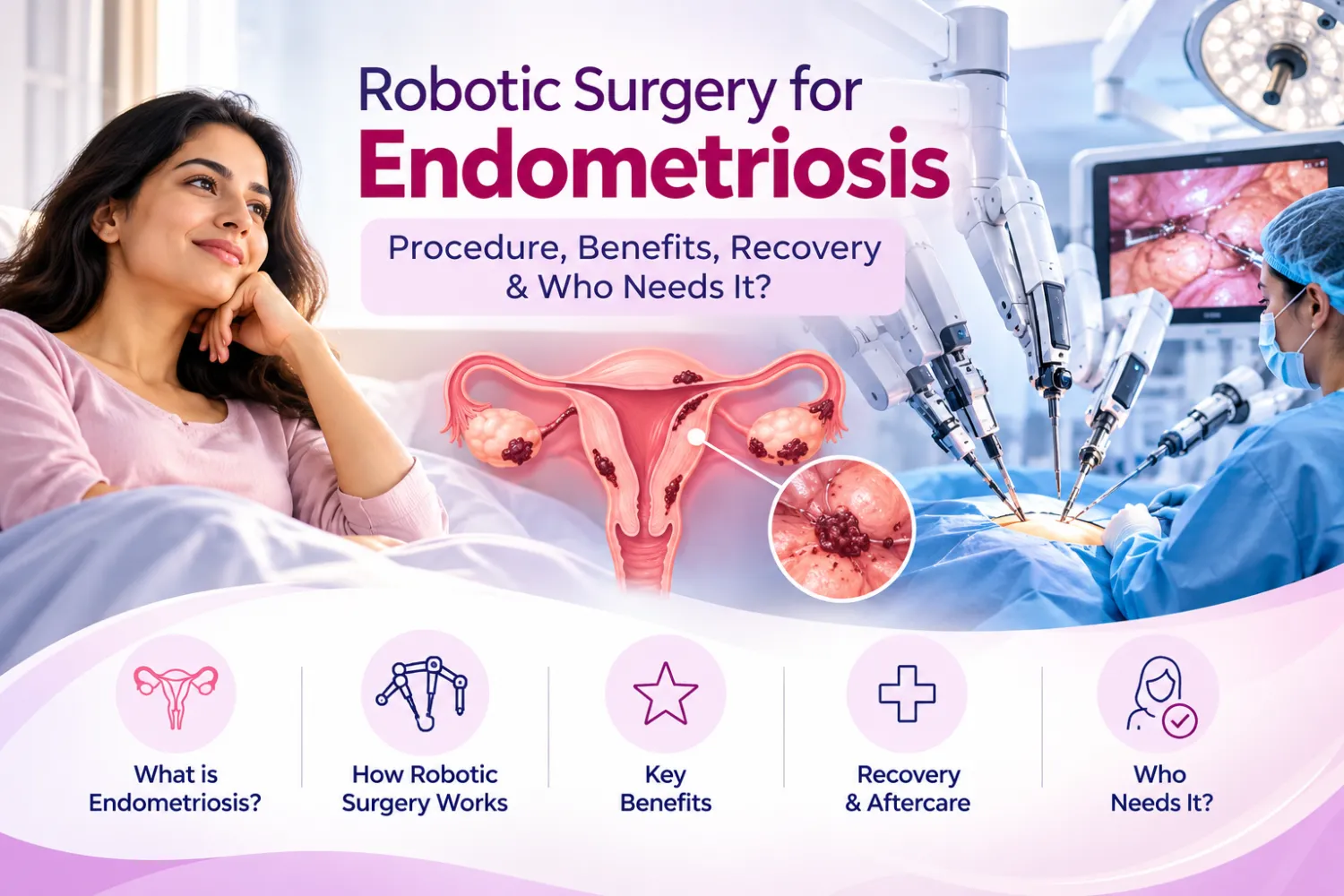
Laparoscopic vs Robotic Endometriosis Surgery
Both conventional laparoscopy and robotic-assisted surgery are minimally invasive approaches.
Robotic systems provide technical features such as three-dimensional visualization and articulated instruments.
Conventional laparoscopy, meanwhile, is a well-established approach for endometriosis surgery.
Robotic surgery has not been proven to be universally superior to conventional laparoscopy for every patient with endometriosis.
The choice should therefore depend on:
- Disease complexity
- Planned procedure
- Available technology
- Surgeon training and experience
- Individual patient considerations
The surgical platform is important.
The experience and judgment of the surgeon using it are even more important.
What Is the “Best” Surgery for Endometriosis?
There is no single operation that is best for every woman.
For one patient, the appropriate approach may be medical management without surgery.
For another, laparoscopic excision may be appropriate.
For selected complex cases, robotic-assisted surgery may be considered.
For a woman whose main concern is infertility, fertility treatment may need to take priority.
Good treatment begins by defining the patient’s problem and treatment objective rather than choosing a procedure first.
When Should You Consult an Endometriosis Specialist?
Consider seeking specialist assessment if you experience:
- Period pain interfering with daily life
- Persistent pelvic pain
- Pain during intercourse
- Painful bowel movements during periods
- Cyclical urinary symptoms
- Recurrent ovarian endometriomas
- Difficulty becoming pregnant with suspected endometriosis
- Persistent symptoms despite medical treatment
- Previously diagnosed deep endometriosis
Severe period pain should not automatically be dismissed as something every woman must tolerate.
At the same time, not every episode of pelvic pain is caused by endometriosis.
Appropriate evaluation helps distinguish between these possibilities.
Choosing an Endometriosis Surgeon in Delhi
When searching for an endometriosis specialist in Delhi or laparoscopic endometriosis surgeon in Delhi, patients should consider more than whether a surgeon performs laparoscopy.
Endometriosis surgery requires an understanding of how the disease can affect different pelvic structures.
Useful questions include:
- Does the surgeon regularly manage endometriosis?
- Is there experience with minimally invasive gynaecological surgery?
- How will my disease be mapped before surgery?
- How will my fertility goals influence the operation?
- How will ovarian tissue be protected if an endometrioma is present?
- What happens if bowel, bladder or ureteric disease is discovered?
- Is multidisciplinary support available if required?
- What postoperative treatment might be needed?
The consultation should also explain situations in which surgery may not be necessary.
That is an equally important part of endometriosis care.
About Dr Usha M Kumar
Dr Usha M Kumar is a senior gynaecologist in Delhi with extensive experience in minimally invasive gynaecological surgery, including laparoscopic and robotic procedures.
Her clinical work includes the management of endometriosis, ovarian cysts, fibroids and other gynaecological conditions that may require advanced minimally invasive surgery.
Women experiencing severe period pain, chronic pelvic pain, suspected endometriosis, recurrent endometriomas or fertility concerns associated with endometriosis can undergo detailed evaluation to determine whether medical management, fertility treatment, laparoscopic surgery, robotic surgery or another approach is appropriate.
Frequently Asked Questions
Is laparoscopic surgery effective for endometriosis?
Laparoscopic surgery is an established surgical approach for endometriosis and may reduce endometriosis-associated pain in appropriately selected patients. Outcomes vary according to disease pattern and individual factors.
Is excision better than ablation for endometriosis?
International guidance indicates that excision may be considered rather than ablation for endometriosis-associated pain when surgery is performed. The appropriate surgical technique depends on the location and nature of disease.
Can endometriosis come back after excision?
Yes. Endometriosis is a chronic condition, and recurrence of disease or symptoms can occur even after surgery.
Can I become pregnant naturally after endometriosis surgery?
Natural conception is possible after surgery, but fertility depends on age, ovarian reserve, fallopian tube function, severity of disease, male fertility and several other factors.
Should an endometrioma always be removed?
No. Treatment depends on symptoms, size and appearance of the cyst, age, ovarian reserve, previous surgery and fertility plans.
Can surgery reduce ovarian reserve?
Surgery involving an ovary, particularly surgery for an endometrioma, can potentially affect ovarian reserve. This should be considered carefully in women planning future pregnancy.
How painful is recovery after laparoscopic endometriosis surgery?
Postoperative discomfort varies according to the extent of surgery. Medication is generally used to manage pain, and recovery tends to be faster than after open abdominal surgery.
How many days of hospitalization are required?
Hospital stay varies according to the complexity of surgery and the patient’s recovery. More extensive surgery may require longer observation.
Is robotic surgery better than laparoscopic surgery?
Not for every patient. Both are minimally invasive approaches. Robotic technology may provide technical advantages in selected operations, but it has not been established as universally superior to conventional laparoscopy.
Can severe endometriosis be treated laparoscopically?
Many cases of extensive endometriosis can be managed using minimally invasive techniques by appropriately trained surgeons. The approach depends on disease distribution, organ involvement and individual circumstances.
Final Takeaway
The most important question in endometriosis treatment is not:
“Should I have laparoscopy?”
It is:
“Why am I having surgery, and what are we trying to achieve?”
For one woman, the objective may be relief from severe pain.
For another, it may be treatment of an ovarian endometrioma.
For another, fertility preservation may be the overriding priority.
And for some women, surgery may not be required at all.
Laparoscopic endometriosis excision surgery can be an important treatment option when there is a clear indication for surgery. But successful endometriosis management depends on careful diagnosis, appropriate patient selection, surgical expertise and a long-term plan that takes symptoms, fertility and quality of life into account.