




Posted By: Dr. Usha M Kumar on 20 Oct 2026
When surgery is considered for endometriosis, one of the most common questions patients encounter is:
Should endometriosis be excised or ablated?
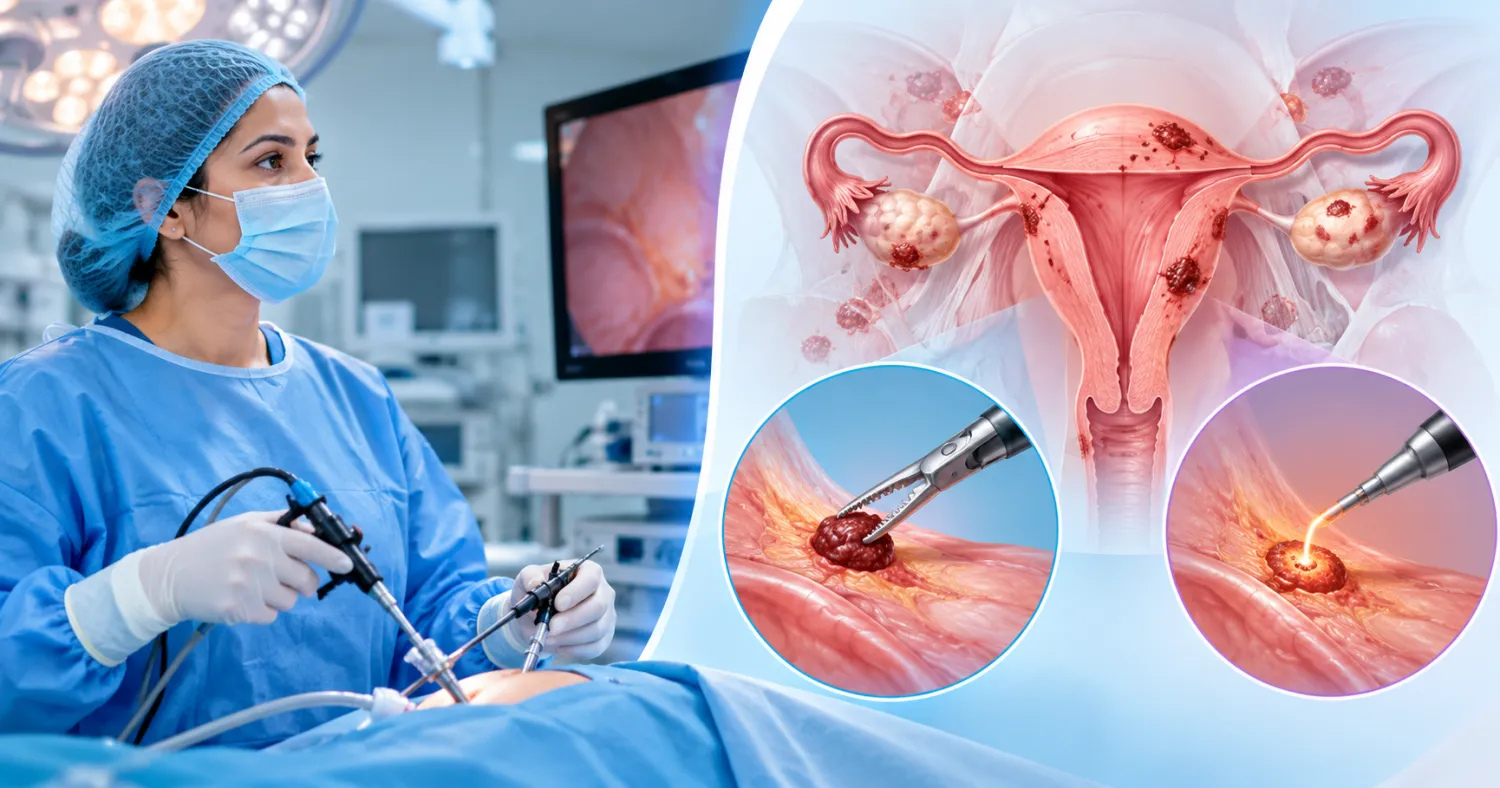
Both excision and ablation are surgical techniques used to treat endometriosis, but they work differently. Excision involves cutting out identified endometriotic tissue, whereas ablation aims to destroy the lesion, generally using an energy source.
The distinction can be particularly important when endometriosis is deep, affects the ovaries, involves surrounding organs, or has returned after previous treatment.
However, describing excision as universally “better” than ablation oversimplifies a complex condition.
The right surgical technique depends on the type, depth and location of endometriosis, the patient’s symptoms, fertility plans, ovarian reserve, previous operations and the surgeon’s assessment.
For women considering endometriosis excision surgery in India, understanding these differences can help them have a more informed discussion with their gynaecological surgeon.
What Is Endometriosis?
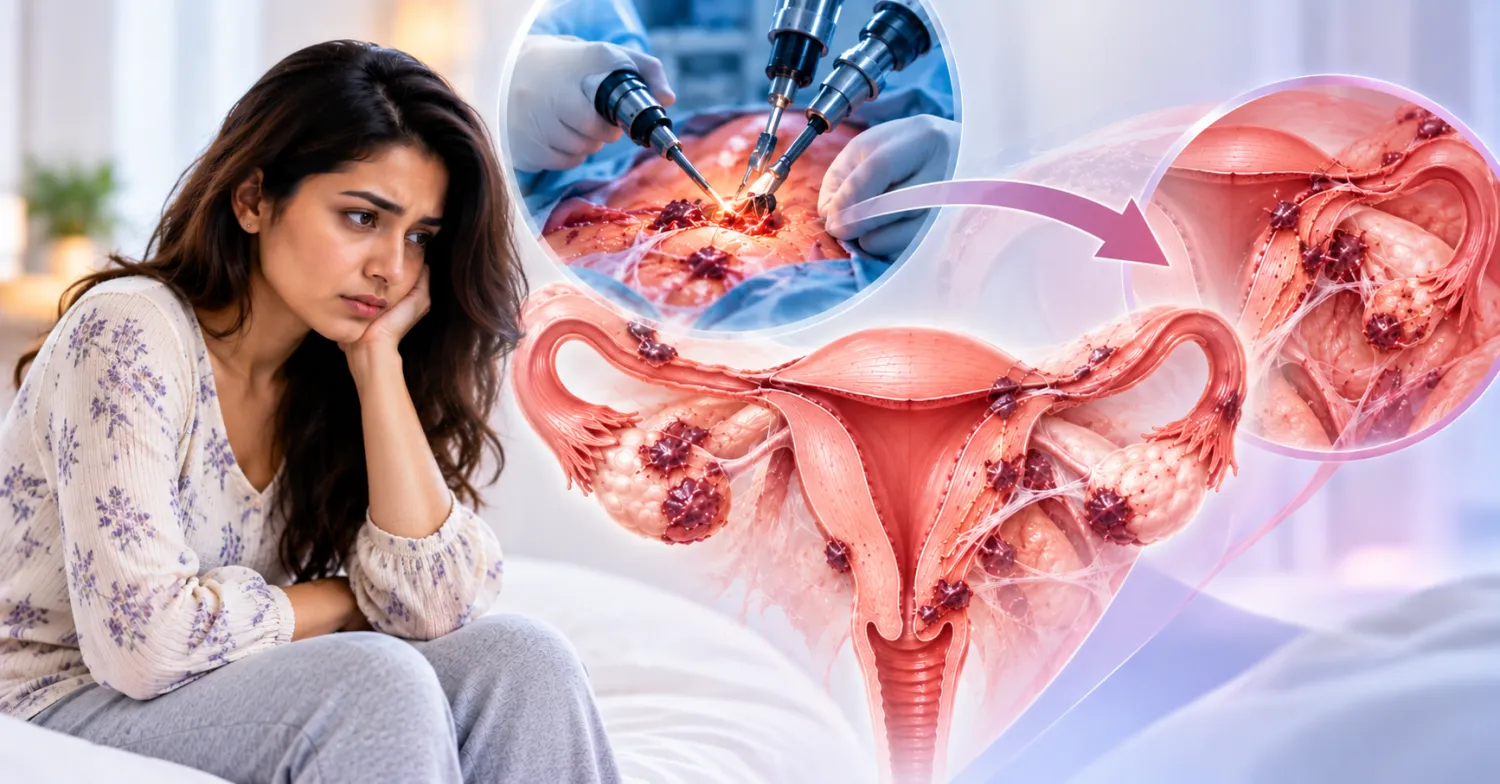
Endometriosis is a chronic condition in which tissue similar to the lining of the uterus is found outside the uterus.
It commonly occurs around the pelvis and may involve:
- pelvic peritoneum
- ovaries
- fallopian tubes
- tissues behind the uterus
- uterosacral ligaments
- vagina and rectovaginal region
- bowel
- bladder
- ureters
Endometriosis can cause inflammation, scarring and adhesions between pelvic organs.
Symptoms vary considerably. Some women experience severe period pain and chronic pelvic pain, while others present primarily because of difficulty becoming pregnant.
Common symptoms include:
- painful periods
- chronic or recurrent pelvic pain
- pain during or after intercourse
- painful bowel movements
- pain while urinating, particularly around menstruation
- abdominal bloating
- heavy or troublesome periods
- infertility
- fatigue
Importantly, symptom severity does not always correspond with how extensive the endometriosis appears.
When Is Surgery Considered for Endometriosis?
Not every woman diagnosed with endometriosis needs surgery.
Treatment can include pain-relieving medication, hormonal treatment, surgery or a combination of approaches.
Surgery may be considered when:
- pain remains troublesome despite appropriate medical treatment
- an ovarian endometrioma requires treatment
- deep endometriosis is suspected
- the bowel, bladder or ureter is affected
- pelvic anatomy is significantly distorted by adhesions
- fertility is a concern in selected circumstances
- symptoms recur after previous treatment
- diagnosis or the extent of disease remains uncertain in an appropriate clinical setting
The decision should be based on the individual patient’s symptoms, priorities and reproductive plans rather than simply on the stage of endometriosis.
What Is Endometriosis Excision Surgery?
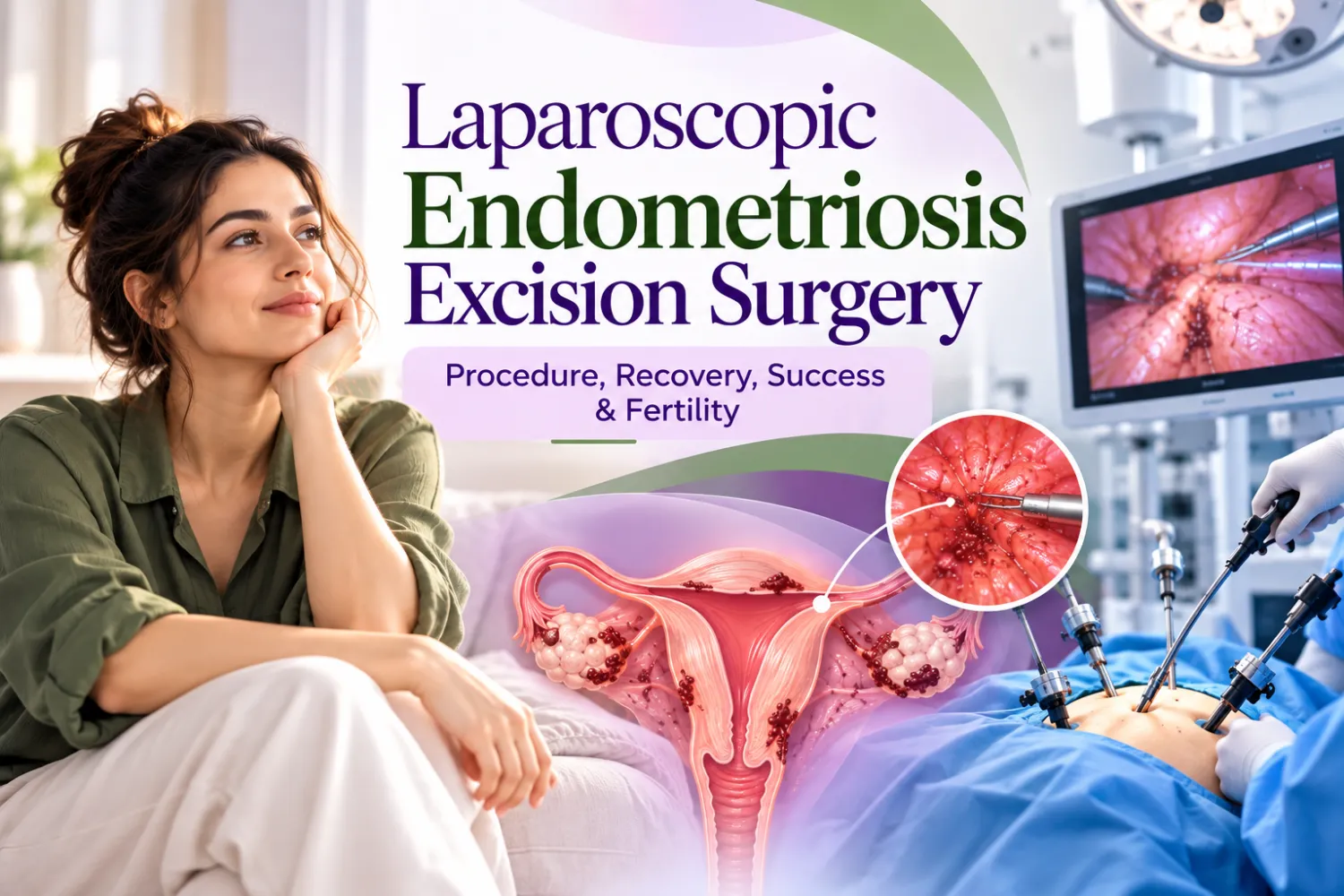
Endometriosis excision surgery means surgically removing identified endometriotic lesions.
During laparoscopic excision, the surgeon carefully separates the abnormal tissue from surrounding healthy structures and removes it.
Think of it conceptually as removing the lesion rather than only treating its visible surface.
The excised tissue can also be sent for histopathological examination when appropriate.
Excision may be used for different forms of endometriosis, but its complexity varies enormously.
Removing a small superficial lesion is very different from excising deep endometriosis attached to the bowel, bladder, ureter or other important structures.
This is why the term “endometriosis excision surgery” can describe operations ranging from relatively straightforward procedures to highly complex pelvic surgery.
What Is Endometriosis Ablation?
Endometriosis ablation involves destroying endometriotic tissue rather than cutting it out.
Depending on the surgical technique, energy may be used to treat the lesion.
Ablation can be appropriate for selected superficial lesions because the surgeon may be able to treat visible disease without performing deeper tissue dissection.
However, the limitation is that the surgeon is destroying rather than physically removing the treated tissue.
The significance of that difference depends greatly on the nature of the lesion.
A superficial lesion and a deeply infiltrating endometriotic nodule should not be viewed as the same surgical problem.
Excision vs Ablation: What Is the Main Difference?
The simplest distinction is:
Excision = removing the lesion.
Ablation = destroying the lesion in place.
But the clinically important question is not merely which technique sounds more complete.
It is:
Which technique is appropriate for this particular lesion, in this particular location, for this particular patient?
That distinction is essential because endometriosis is a heterogeneous disease.
Is Excision Better Than Ablation for Endometriosis?
This is one of the most searched questions about endometriosis surgery.
The answer requires some nuance.
Evidence comparing excision with ablation has produced mixed findings, particularly for minimal-to-mild or superficial endometriosis. Some research has found improvements in certain pain outcomes with excision, while other analyses have not demonstrated a significant difference between the two techniques for several pain measures.
Therefore, it would be inaccurate to tell every patient that excision is always superior.
Current international guidance allows excision to be considered instead of ablation for reducing endometriosis-associated pain.
The choice should ultimately reflect disease characteristics and surgical circumstances.
Why Can Excision Be Important in Deep Endometriosis?
The distinction becomes more significant when disease extends beneath the tissue surface.
Deep endometriosis can form nodules or fibrosis involving areas such as:
- uterosacral ligaments
- rectovaginal space
- vagina
- bowel
- bladder
- ureters
- pelvic sidewall
Simply treating the visible surface may not adequately address a lesion extending deeper into the tissue.
Excision allows the surgeon to dissect and remove identified deep disease when this is appropriate and safely achievable.
These procedures can be technically demanding because vital organs, blood vessels, nerves and urinary structures may be nearby.
Complex deep endometriosis should therefore be approached differently from uncomplicated superficial disease.
What About Excision vs Ablation for Superficial Endometriosis?
Superficial peritoneal endometriosis occurs on the surface lining of the pelvis.
Both excision and ablation may be used in appropriate cases.
Current evidence does not establish that one technique produces superior outcomes in every woman with superficial disease.
The decision can depend on factors including:
- appearance of the lesion
- location
- proximity to important structures
- surgeon experience
- previous treatment
- symptoms
- overall pattern of disease
This is an important example of why endometriosis surgery should not be reduced to a simple “excision good, ablation bad” message.
What About Ovarian Endometriomas?
An ovarian endometrioma, sometimes called a chocolate cyst, is a different surgical situation.
These cysts contain altered blood products associated with endometriosis and form within the ovary.
Surgical options may include ovarian cystectomy, in which the cyst wall is excised, or selected ablative approaches.
For women undergoing ovarian surgery, the surgeon must balance two objectives:
Treat the disease effectively while preserving as much healthy ovarian tissue as possible.
This is particularly important in women who want future pregnancy.
Why Does Ovarian Reserve Matter?
A woman is born with a finite number of eggs. Ovarian reserve refers broadly to the remaining reproductive potential of the ovaries.
Both endometriosis itself and ovarian surgery may affect ovarian reserve.
During cystectomy, separating an endometrioma from the ovary can potentially remove or damage some normal ovarian tissue.
Repeated ovarian surgery can make this consideration even more important.
Before recommending surgery for an endometrioma, factors such as the following may therefore need to be considered:
- age
- cyst size
- symptoms
- ovarian reserve
- whether one or both ovaries are involved
- previous ovarian surgery
- infertility history
- plans for natural conception
- plans for IVF or other fertility treatment
The aim is not simply to remove a cyst. It is to achieve the most appropriate balance between disease management and preservation of reproductive potential.
Can Excision Surgery Reduce Endometriosis Pain?
Surgical treatment can help reduce endometriosis-associated pain in appropriately selected patients.
Symptoms that may improve after surgery include:
- painful periods
- chronic pelvic pain
- pain during intercourse
- painful bowel movements
- certain cyclical urinary or bowel symptoms
However, no responsible surgeon should promise that excision will permanently eliminate all pelvic pain.
Pain can be complex.
Long-standing pelvic pain may involve additional factors such as pelvic-floor dysfunction, adenomyosis, adhesions, bladder conditions, bowel disorders or changes in pain processing.
Removing visible endometriosis does not necessarily address every possible contributor to chronic pelvic pain.
This is why careful patient selection and realistic expectations are essential.
Can Endometriosis Return After Excision?
Yes.
Endometriosis is a chronic disease, and recurrence can occur even after technically successful surgery.
Recurrence can mean:
- return of symptoms
- appearance of new lesions
- recurrence of an ovarian endometrioma
- need for further medical treatment
- occasionally, need for additional surgery
Excision should therefore not be marketed as a guaranteed permanent cure.
For women who are not planning pregnancy immediately, postoperative hormonal treatment may sometimes be considered to help prolong the benefit of surgery and manage symptoms.
Is Repeat Endometriosis Surgery Always Recommended?
No.
When symptoms return after previous surgery, another operation is not automatically the next step.
The clinician should reassess:
- the nature of the symptoms
- previous operative findings
- what surgery was previously performed
- current imaging
- ovarian reserve
- fertility plans
- likelihood that recurrent endometriosis explains the symptoms
- potential benefits versus risks of another operation
This is particularly important when the ovaries have previously been operated on.
Multiple operations can increase surgical complexity because of adhesions and altered anatomy.
The objective should be to avoid unnecessary repeat surgery while identifying women who genuinely stand to benefit from another procedure.
Excision Surgery for Deep Infiltrating Endometriosis
Deep infiltrating endometriosis can be among the most technically challenging forms of endometriosis to treat surgically.
Disease may involve more than one pelvic compartment.
For example, a patient may simultaneously have:
- an ovarian endometrioma
- dense adhesions
- uterosacral disease
- rectovaginal endometriosis
- bowel involvement
This makes preoperative planning important.
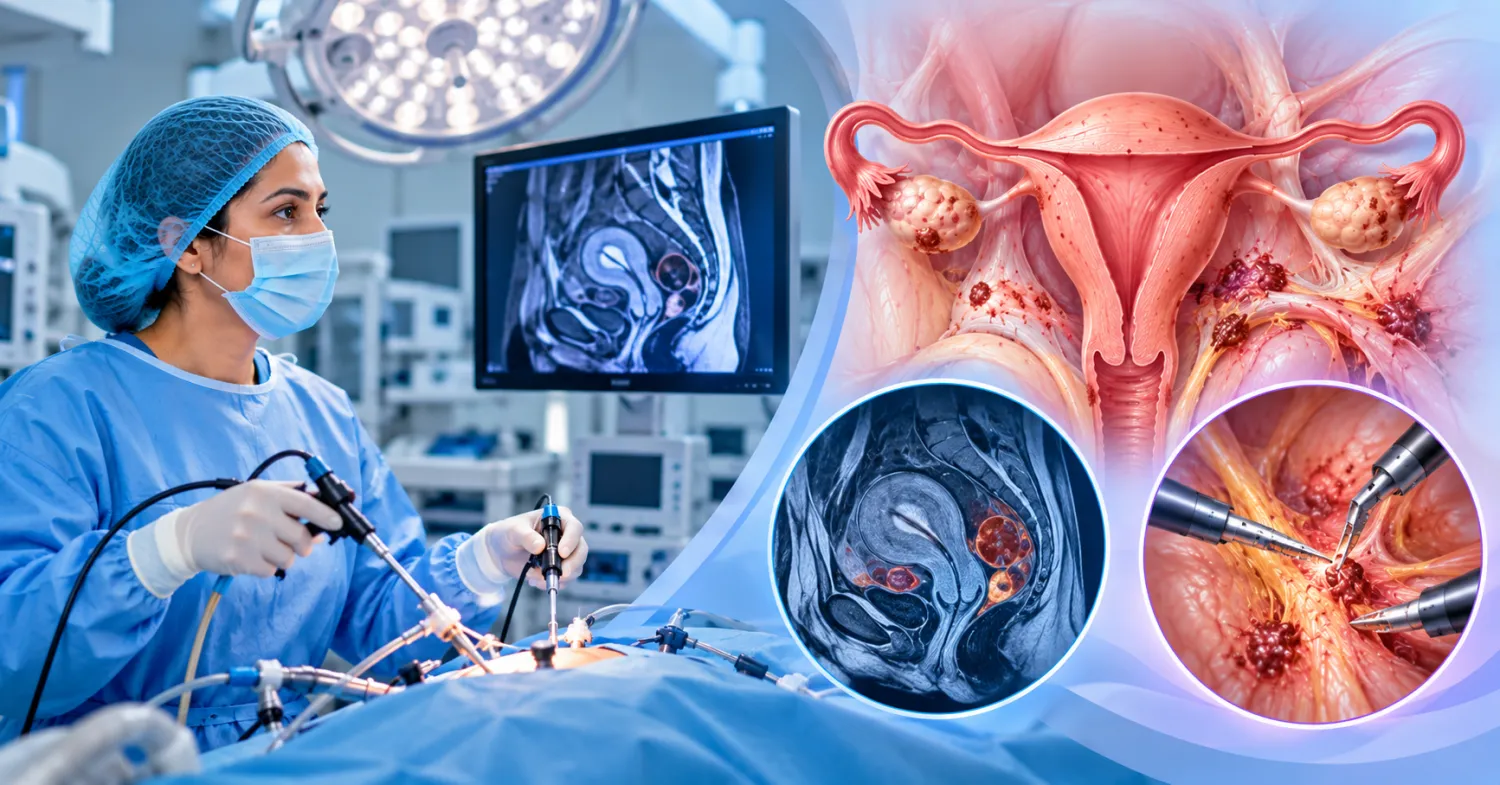
Specialist transvaginal ultrasound and/or pelvic MRI may be used to map suspected deep disease before surgery.
If the bowel, bladder or urinary tract is affected, multidisciplinary planning may be appropriate.
Bowel Endometriosis and Excision
Endometriosis can affect the rectum and other portions of the bowel.
Not every patient with bowel endometriosis requires bowel resection.
Depending on the size, depth and location of the lesion, surgical approaches can vary considerably.
The treatment decision should consider:
- severity of symptoms
- depth of bowel-wall involvement
- size and location of the lesion
- degree of narrowing
- number of lesions
- fertility goals
- potential surgical risks
Complex bowel endometriosis may require collaboration between an advanced gynaecological surgeon and colorectal surgeon.
Bladder and Ureteric Endometriosis
Endometriosis can also involve the urinary tract.
Bladder involvement may cause symptoms such as cyclical bladder pain, urgency or blood in the urine, although symptoms vary.
Ureteric endometriosis requires particular attention because obstruction can sometimes compromise drainage from the kidney.
When urinary tract involvement is suspected, detailed assessment and appropriate surgical planning are important.
A urologist may form part of the multidisciplinary team in selected cases.
Laparoscopic Excision Surgery for Endometriosis
Most endometriosis surgery is now performed using minimally invasive techniques where appropriate.
During laparoscopic endometriosis excision surgery, several small abdominal incisions are used to introduce a camera and surgical instruments.
The surgeon systematically evaluates the pelvis and identifies the extent of disease before performing the planned treatment.
Potential advantages of minimally invasive surgery compared with traditional open surgery can include:
- smaller incisions
- reduced postoperative discomfort in many patients
- shorter hospitalisation in appropriate cases
- earlier mobilisation
- quicker return to routine activities
The actual recovery depends much more on the extent of surgery than simply on the size of the incisions.
A woman undergoing complex bowel and urinary tract surgery will naturally have a different recovery from someone having limited superficial disease treated.
Can Robotic Surgery Be Used for Endometriosis Excision?
Yes.
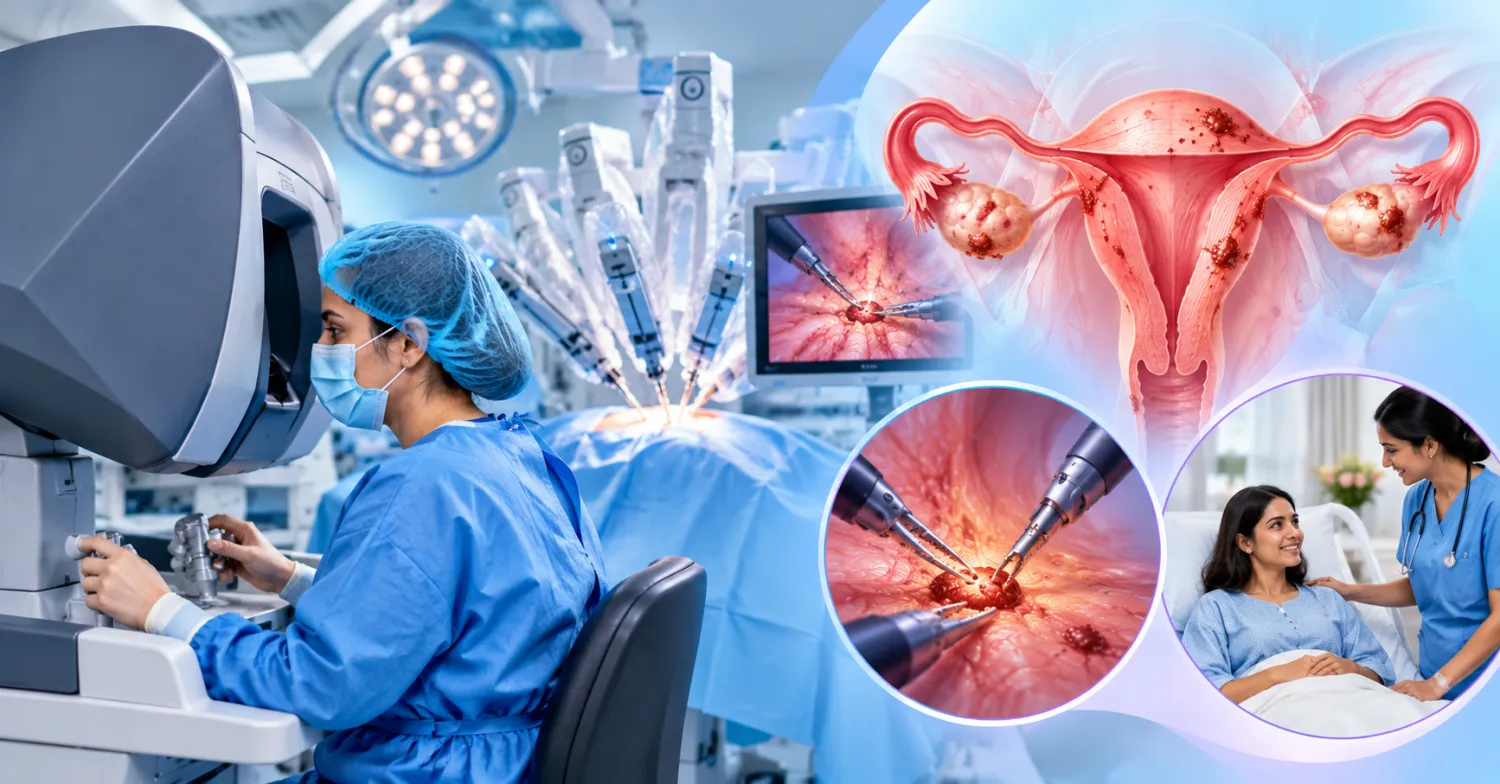
Robotic endometriosis surgery is a minimally invasive approach in which the surgeon controls robotic instruments from a console.
Robotic systems provide three-dimensional magnified vision and articulated instruments.
These technical characteristics may be helpful during certain complex dissections in confined pelvic spaces.
Robotic surgery may be considered for selected cases involving:
- deep endometriosis
- difficult pelvic anatomy
- extensive adhesions
- previous surgery
- complex organ involvement
However, robotic surgery should not automatically be interpreted as superior to conventional laparoscopy.
An experienced laparoscopic surgeon may manage many complex endometriosis cases laparoscopically.
The appropriate technology depends on the disease, surgeon expertise, available infrastructure and individual clinical circumstances.
Excision vs Ablation When Fertility Is a Priority
This requires particularly careful counselling.
Surgical treatment of some forms of endometriosis can improve the chance of spontaneous pregnancy.
However, fertility depends on much more than the presence of endometriosis.
Before surgery, clinicians may need to consider:
- patient’s age
- duration of infertility
- ovarian reserve
- fallopian tube status
- ovarian endometriomas
- previous ovarian surgery
- severity and location of disease
- partner’s fertility assessment
- likelihood of spontaneous conception
- possible need for IVF
For ovarian endometriomas in particular, aggressive removal of disease must be balanced against preservation of healthy ovarian tissue.
For some women, surgery may be an appropriate step toward pregnancy. For others, proceeding directly to fertility treatment may make more sense.
The decision should be individualised.
How Long Does Endometriosis Excision Surgery Take?
There is no standard duration.
The term “excision surgery” covers a very wide range of procedures.
A relatively straightforward operation for limited disease may take substantially less time than complex surgery involving multiple pelvic organs.
Duration may depend on:
- number of lesions
- depth of disease
- severity of adhesions
- ovarian involvement
- previous operations
- bowel involvement
- bladder or ureter involvement
- whether other specialists are required
An estimated duration is therefore best discussed after preoperative evaluation.
Recovery After Endometriosis Excision Surgery
Recovery also varies according to surgical complexity.
After minimally invasive surgery, patients are usually encouraged to mobilise according to their surgical team’s instructions.
Early symptoms can include:
- abdominal soreness
- fatigue
- bloating
- mild vaginal bleeding
- discomfort around incision sites
- temporary shoulder-tip discomfort from gas used during laparoscopy
Patients undergoing extensive deep endometriosis excision may require a longer recovery period.
Return to work and exercise should be individualised according to the operation and progress during recovery.
What Are the Risks of Endometriosis Excision Surgery?
All surgery carries potential risks.
Depending on the extent and location of endometriosis, risks can include:
- bleeding
- infection
- injury to nearby organs
- bladder injury
- bowel injury
- ureteric injury
- blood clots
- anaesthetic complications
- adhesions
- need for additional procedures
- conversion to open surgery in uncommon circumstances
- effects on ovarian reserve after ovarian surgery
- persistence or recurrence of symptoms
The risk profile for a straightforward laparoscopic procedure is very different from that of complex surgery involving the bowel or urinary tract.
Individual risks should therefore be discussed with the operating surgeon.
Cost of Endometriosis Excision Surgery in India
Patients frequently search for the cost of endometriosis surgery in India or endometriosis excision surgery cost in India.
There is no single reliable price applicable to every patient.
The cost can vary according to:
- extent of endometriosis
- type of surgery
- conventional laparoscopy or robotic surgery
- ovarian involvement
- bowel involvement
- bladder or ureteric involvement
- requirement for multidisciplinary surgeons
- operating time
- hospital and room category
- surgical consumables
- investigations
- duration of hospitalisation
- insurance coverage
A woman requiring treatment of a relatively uncomplicated ovarian endometrioma will not necessarily have the same surgical requirements as a patient with severe deep endometriosis involving the rectum and ureter.
Therefore, an accurate estimate is generally possible only after clinical assessment and review of imaging.
How to Find the Best Endometriosis Surgeon in India
Patients understandably search terms such as best endometriosis surgeon in India, best endometriosis surgeon in Delhi and endometriosis excision specialist in India.
Rather than relying solely on a “best doctor” claim, patients should evaluate whether the surgeon has appropriate expertise for their specific disease.
Questions worth asking include:
Does the surgeon regularly treat endometriosis?
Endometriosis surgery requires an understanding of the many different appearances and locations of the disease.
Does the surgeon perform advanced minimally invasive surgery?
Complex endometriosis can require advanced laparoscopic or robotic surgical skills.
Is deep endometriosis routinely managed?
Experience with ovarian endometriomas alone does not necessarily indicate experience with bowel, bladder, ureteric or rectovaginal endometriosis.
Is fertility preservation considered?
For younger women and women planning pregnancy, ovarian reserve and reproductive goals should influence surgical decisions.
Is multidisciplinary support available?
Complex endometriosis may require collaboration with colorectal surgeons, urologists, radiologists, fertility specialists and pain specialists.
Does the surgeon explain alternatives to surgery?
Expert endometriosis care is not defined by operating on every patient.
Sometimes the appropriate recommendation is medical treatment, observation, fertility treatment or multidisciplinary pain management rather than surgery.
Excision vs Ablation: Which Should You Choose?
There is no universal answer.
For selected superficial disease, either excision or ablation may be appropriate.
For deep disease, excision is often more relevant because the lesion extends beneath the tissue surface.
For ovarian endometriomas, treatment requires a balance between reducing recurrence and preserving ovarian reserve.
The appropriate choice depends on:
- type of endometriosis
- depth
- location
- symptoms
- previous surgery
- ovarian reserve
- age
- fertility plans
- surgeon expertise
This is why choosing the technique before understanding the disease is the wrong way around.
First define the disease. Then choose the surgical strategy.
Frequently Asked Questions
Is excision surgery the best treatment for endometriosis?
Excision is an important surgical technique and may be particularly appropriate for certain types of endometriosis. However, it is not automatically the best treatment for every lesion or every patient. Some women do not need surgery at all.
What is the difference between excision and ablation?
Excision physically removes identified endometriotic tissue. Ablation destroys the lesion using an energy-based technique. The appropriate method depends on the type and location of disease.
Is excision better than ablation for long-term relief?
Evidence does not support claiming that excision is universally superior for every type of endometriosis. Excision may have advantages in certain circumstances, particularly where disease extends deeper into tissues, but treatment should be individualised.
Can endometriosis return after excision?
Yes. Endometriosis is a chronic disease, and recurrence of symptoms or lesions can occur after surgery.
Is endometriosis excision surgery painful?
Postoperative discomfort is expected, but pain varies with the extent of surgery. Medication and appropriate postoperative care are used to manage recovery.
Can excision improve fertility?
Surgical treatment can improve spontaneous pregnancy chances in selected women, but fertility outcomes depend on age, ovarian reserve, disease location, tubal function and other factors.
Does excision damage the ovaries?
Surgery for ovarian endometriomas can affect ovarian reserve because healthy ovarian tissue may be inadvertently affected. This is why ovarian surgery requires careful planning and tissue-preserving technique.
Is robotic excision better than laparoscopic excision?
Not necessarily. Both are minimally invasive surgical approaches. Robotic technology can offer technical advantages in selected complex procedures, while conventional laparoscopy is highly effective in experienced hands.
How much does endometriosis excision surgery cost in India?
The cost depends on disease complexity, surgical approach, hospitalisation, technology used and whether other specialists are required. An individual assessment is needed for a meaningful estimate.
Do I need a hysterectomy for endometriosis?
Usually not. Many endometriosis operations preserve the uterus and ovaries. Hysterectomy is considered only in selected circumstances and does not itself guarantee elimination of endometriosis elsewhere.
Endometriosis Excision Surgery in Delhi
For patients considering endometriosis excision surgery in Delhi, the most important step is a detailed assessment of the disease before deciding on an operation.
Endometriosis can range from small superficial lesions to extensive disease involving multiple pelvic organs.
Consequently, treatment should not follow a one-size-fits-all surgical protocol.
Appropriate imaging, assessment of symptoms, fertility planning and discussion of medical and surgical alternatives help determine whether surgery is necessary and, if it is, which surgical technique is most appropriate.
About Dr Usha M Kumar
Dr Usha M Kumar is a senior gynaecologist with extensive experience in minimally invasive gynaecological surgery, including laparoscopic and robotic procedures.
Her approach to endometriosis management focuses on individualised evaluation, appropriate surgical planning and consideration of fertility and organ preservation wherever clinically relevant.
Patients with suspected endometriosis, ovarian endometriomas, recurrent endometriosis or complex deep endometriosis can be evaluated to determine whether medical management, laparoscopic surgery, robotic surgery, fertility-focused management or another treatment pathway is appropriate.
The objective of endometriosis treatment is not simply to remove every visible lesion.
It is to achieve the best possible balance between symptom control, disease management, preservation of healthy organs, reproductive goals and long-term quality of life.