




Posted By: Dr. Usha M Kumar on 04 Nov 2026
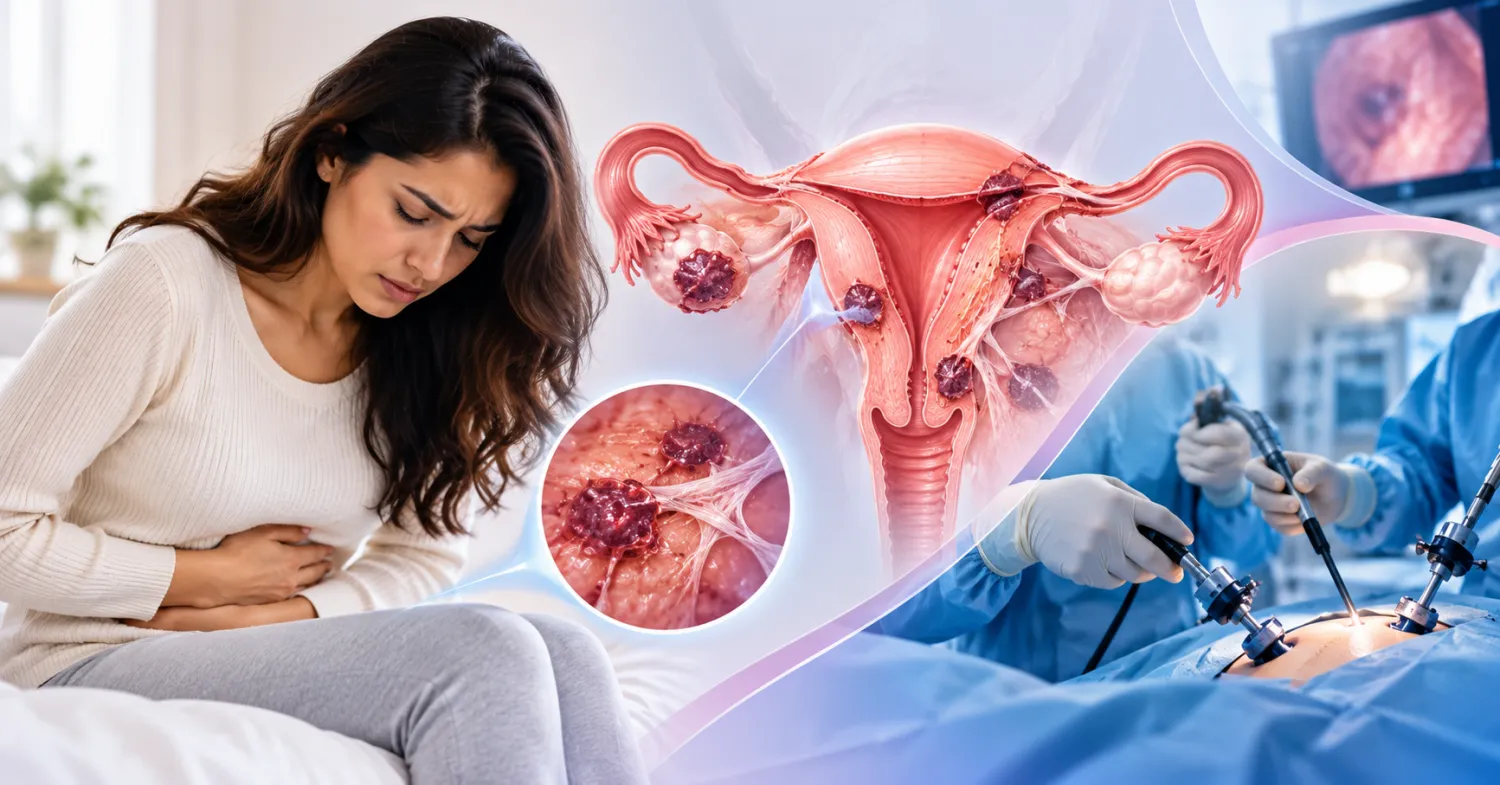
If your gynaecologist has used the word “hysterectomy”, you probably went home with more questions than answers. Is it really necessary? Will I need a big cut? How long before I can get back to work, or to looking after my family? And lately, a newer question: should it be done with a robot?
These are fair questions, and they deserve straight answers. In this guide, we explain what a robotic hysterectomy is, who actually benefits from it, what the recovery is like, and what to ask before you decide. It is written for women across South Delhi, from Saket, Malviya Nagar and Greater Kailash to Lajpat Nagar and beyond, who want clear information before making an important decision.
What is a hysterectomy?
A hysterectomy is a surgery to remove the uterus (womb). Depending on the reason for surgery, the surgeon may also remove the cervix, the fallopian tubes, or the ovaries. These are not the same operation, and the difference matters.
- Total hysterectomy: the uterus and cervix are removed.
- Subtotal (supracervical) hysterectomy: the uterus is removed and the cervix is left in place.
- Hysterectomy with salpingectomy or oophorectomy: one or both fallopian tubes, or one or both ovaries, are removed along with the uterus.
Your age, your symptoms, your scan findings and your family history all decide which version is right for you. A good surgeon will explain this to you in plain language before anything is booked. You can read more about the procedure on our hysterectomy (uterus removal surgery) page.
Why might you need one?
Many women are told that surgery is the only option, when in fact it is the last of several. Hysterectomy is generally considered when other treatments have not worked, or when the condition is serious enough that surgery is the safest path. Common reasons include:
- Uterine fibroids causing heavy bleeding, pain or pressure, especially when they are large or numerous. If this is your situation, our guide to fibroid treatment in Delhi explains the alternatives, including fibroid removal that keeps the uterus.
- Heavy or prolonged periods that have not responded to medicines or other procedures.
- Adenomyosis, where the lining of the womb grows into its muscle wall.
- Endometriosis that is severe or has not improved with other treatment.
- Uterine prolapse, where the womb slips down into the vagina.
- Pre-cancerous changes or cancer of the uterus, cervix or ovary.
If you are under 40 and hoping to have children, a hysterectomy is almost never the first answer. Ask whether fibroid removal (myomectomy), hysteroscopy or hormonal treatment could work for you instead.
What makes robotic surgery different?
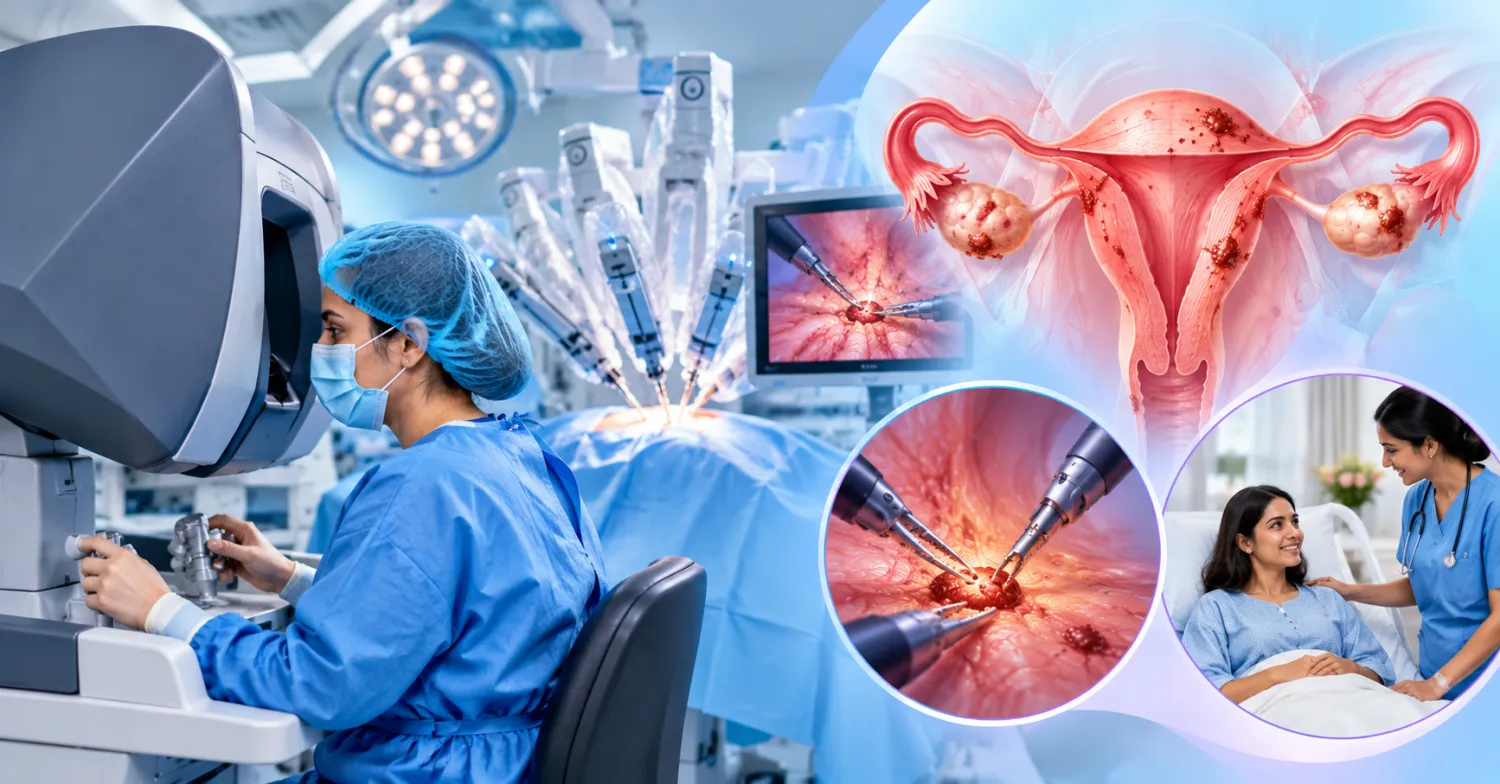
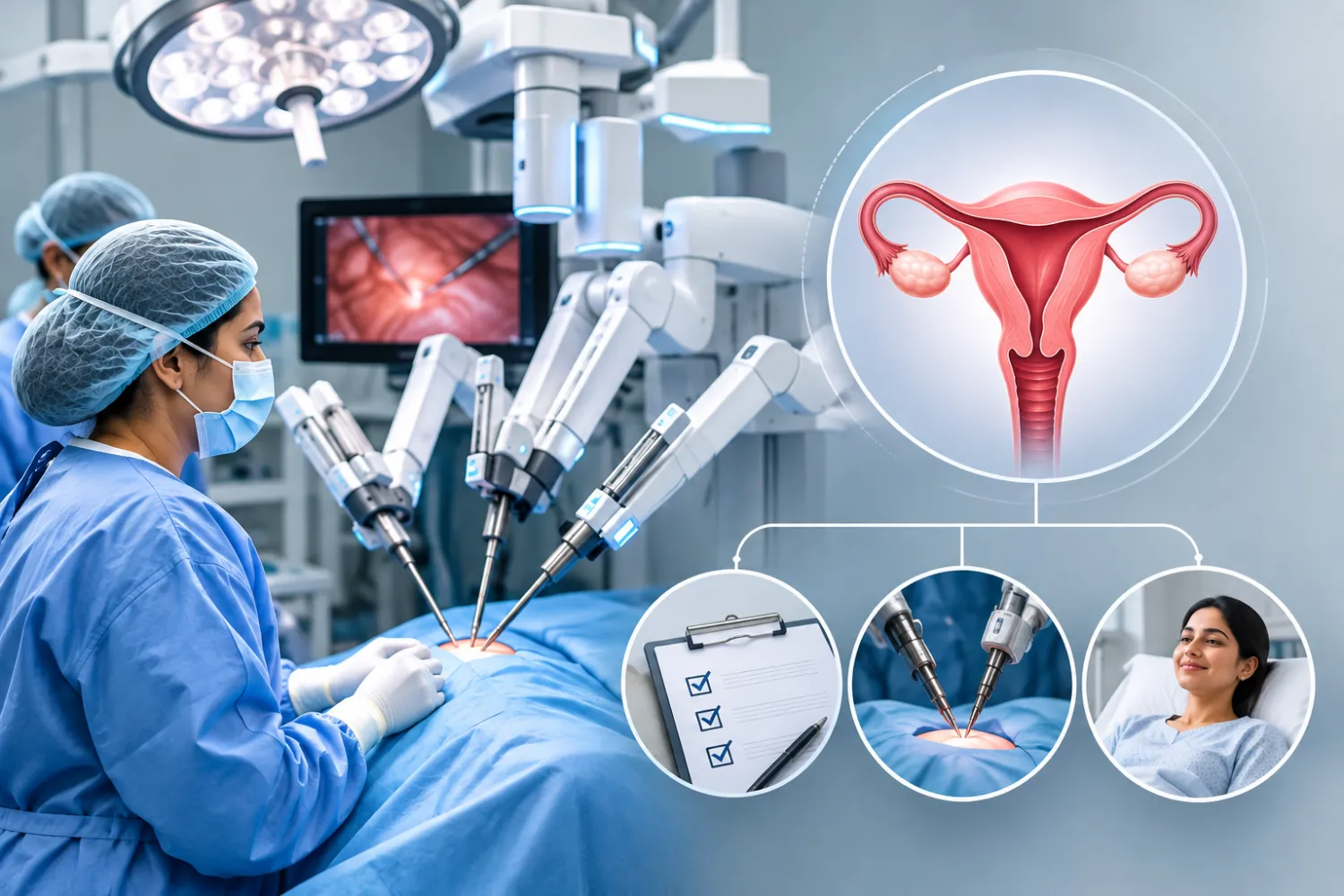
In a robotic hysterectomy, the surgeon operates through a few tiny incisions, usually less than a centimetre each. A camera gives a magnified, three-dimensional view of the pelvis, and the surgeon controls fine, wristed instruments from a console in the operating theatre.
To be clear about one thing: the robot does not operate by itself. Every movement is made by the surgeon. What the technology adds is steadiness, a very clear view and an ability to work in tight spaces, which can matter when the anatomy is complicated.
Compared with open surgery, robotic and laparoscopic approaches generally mean:
- Smaller incisions and less visible scarring
- Less blood loss during the operation
- A shorter hospital stay
- Less pain after surgery in most patients
- A quicker return to normal activities
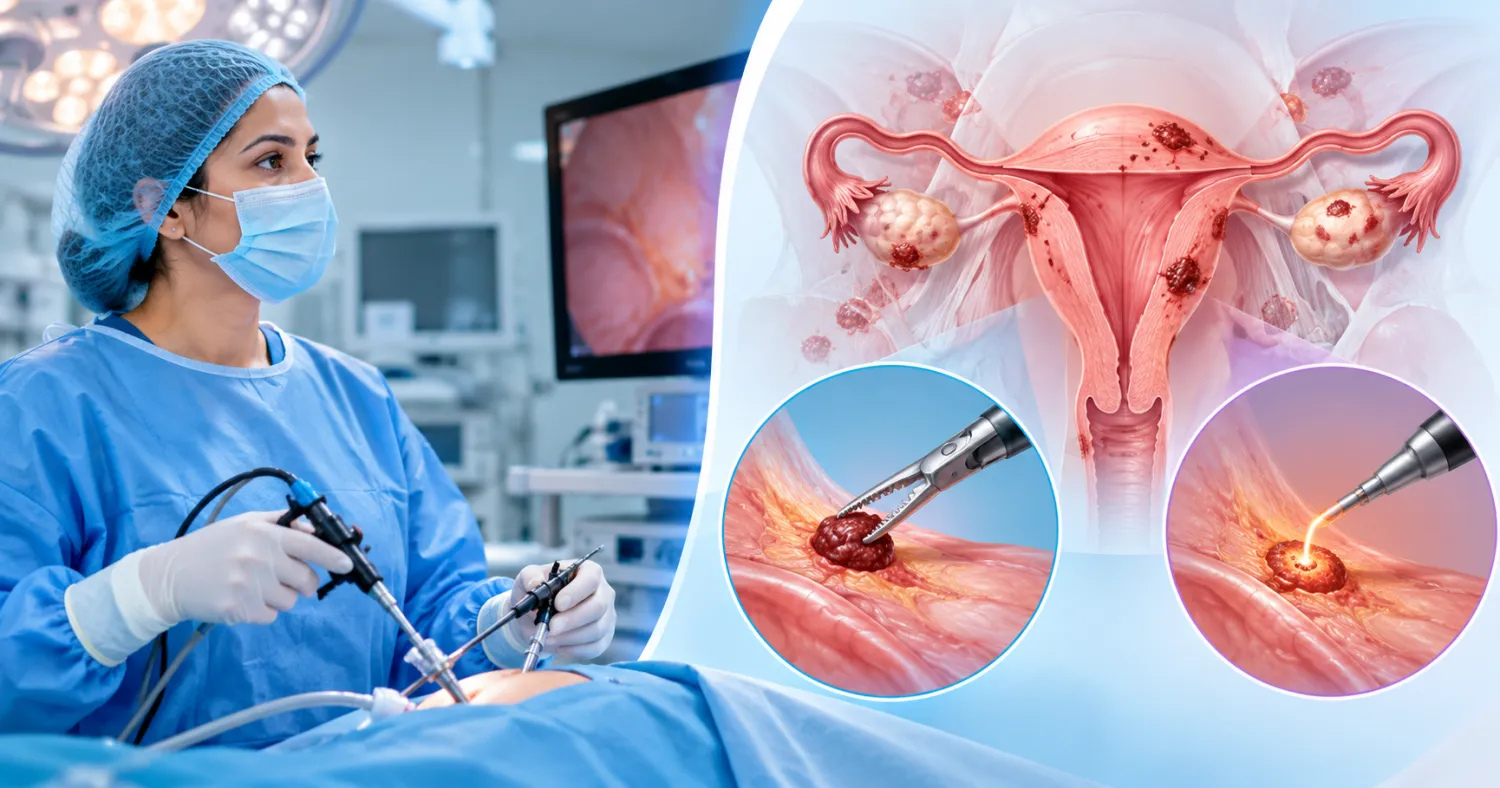
Compared with conventional laparoscopy, the robotic approach can be especially helpful when the uterus is enlarged, when there are dense adhesions from previous surgery or endometriosis, or when the surgery is more complex. For many straightforward cases, laparoscopic hysterectomy gives excellent results too, and Dr. Usha performs both. You can read about that on our laparoscopic gynaecological surgery page. The right choice depends on you, not on the technology.
Who is a good candidate for a robotic hysterectomy?
Robotic surgery may be suitable if:
- You need a hysterectomy for a benign (non-cancerous) condition such as fibroids, adenomyosis or heavy bleeding
- You have endometriosis or scar tissue from earlier surgeries such as a C-section
- Your uterus is larger than usual
- You have early-stage gynaecological cancer where a minimally invasive approach is appropriate
- You want a smaller scar and a faster recovery and are medically fit for anaesthesia
It may not be the best option if you have certain heart or lung conditions that make a long period under anaesthesia risky, if the disease has spread widely, or if an open operation would simply be safer. A careful assessment before surgery decides this, and it should always be an honest one. If a minimally invasive approach is not right for you, you should be told so.
What happens before surgery?
The weeks before the operation are as important as the operation itself. Expect:
- A detailed consultation: your symptoms, periods, past surgeries, medicines and family history.
- Tests: usually a pelvic ultrasound, blood tests and sometimes an MRI or hysteroscopy. If cancer is a concern, further investigations may be needed. Dr. Usha also runs a dedicated gynaecologic cancer screening programme.
- A fitness check: to make sure you are safe for anaesthesia.
- A real conversation about options: including what happens to your ovaries, and whether you may go into menopause after surgery.
That last point is worth pausing on. If your ovaries are removed before natural menopause, you can experience menopausal symptoms soon after surgery. This is a decision to make together with your doctor, based on your age and risk factors, never something to be decided on the operating table without discussion.
What does recovery look like?
Every woman recovers at her own pace, but a typical pattern after a robotic or laparoscopic hysterectomy looks like this:
- Hospital stay: often one to two days, depending on your condition and the extent of surgery.
- First week: tiredness, mild discomfort around the small incisions, and some shoulder-tip pain from the gas used during surgery. Light walking is encouraged from day one.
- Two to three weeks: many women with desk jobs are ready to return to work, though this varies.
- Four to six weeks: heavy lifting, intense exercise and sexual intercourse are usually avoided until your surgeon clears you.
Some vaginal spotting or discharge for a few weeks is normal. Call your doctor promptly if you have heavy bleeding, fever, severe or worsening pain, a foul-smelling discharge, or pain and swelling in the legs.
After surgery you will no longer have periods, and if the uterus alone has been removed and the ovaries preserved, you will not go into menopause because of the operation. Many women say the biggest change is relief from months or years of pain and bleeding.
What are the risks?
No operation is risk-free, and a trustworthy surgeon will say so. Possible risks of any hysterectomy include bleeding, infection, injury to nearby organs such as the bladder, ureters or bowel, blood clots, and reactions to anaesthesia. Occasionally a minimally invasive operation has to be converted to an open one for safety. These complications are uncommon, and experience matters: an operation done by someone who has performed thousands of surgeries tends to be smoother and safer. Dr. Usha has over 30 years of experience and has performed more than 10,000 surgeries across open, laparoscopic and robotic techniques.
What affects the cost?
It is natural to ask about cost, but a single figure would be misleading, because the cost of a robotic hysterectomy depends on several things:
- The type of hysterectomy and any additional procedures needed
- The size of the uterus and the complexity of the case
- The hospital room category and the length of stay
- Investigations, medicines and consumables
- Your insurance cover, which often applies to medically necessary surgery
The best way to get an accurate estimate is to have your reports reviewed. You can also arrange this remotely through our telephone and video consultations, which is useful if you are outside Delhi or short on time.
Questions to ask any surgeon before a hysterectomy
- Is a hysterectomy really necessary, or are there other treatments I should try first?
- Will my ovaries be removed, and why or why not?
- Which approach do you recommend for me (open, laparoscopic or robotic), and why?
- How many of these operations have you performed?
- What are the risks specific to my case?
- What will recovery realistically look like for me?
We have also put together a guide to how to choose a gynaecologist in Delhi that goes deeper into this. And if endometriosis is part of your story, our article on robotic surgery for endometriosis explains how the robotic approach helps in more complex disease.
Frequently asked questions
Is robotic hysterectomy safer than open surgery? For suitable patients, minimally invasive surgery generally means less blood loss, lower infection risk and faster recovery. Safety still depends on the surgeon’s experience and on whether you are a good candidate.
Will I have visible scars? The incisions are small, usually under a centimetre, and fade over time.
Will a hysterectomy cause menopause? Not if your ovaries are left in place. If both ovaries are removed before natural menopause, symptoms can begin soon after surgery.
How long will I stay in hospital? Often one to two days, though it depends on your case.
Can I have a baby after a hysterectomy? No. After the uterus is removed, pregnancy is not possible. This is why other options are discussed first for women who wish to have children.
Do I need a hysterectomy for fibroids? Not always. Depending on your age and plans, fibroid removal that preserves the uterus may be possible.
Considering a robotic hysterectomy in Saket? Talk to Dr. Usha M Kumar
A hysterectomy is a significant decision, and you should never feel rushed into it. Dr. Usha M Kumar sees patients at Max Smart Super Speciality Hospital, Saket (1, 2 Press Enclave Road, Mandir Marg, Saket, Delhi 110017), which is well connected by road and metro from across South Delhi, and at her Lajpat Nagar clinic (19 Basement, A Block, Dayanand Colony, Lajpat Nagar 4, Delhi 110024). You can learn more about Dr. Usha, or book an appointment.
Disclaimer: This article is for general information and does not replace a personal medical consultation. Every patient is different, and the right treatment depends on your own examination and reports.