





Posted By: Dr. Usha M Kumar on 24 Jul 2026
Advances in minimally invasive surgery have transformed the treatment of many gynaecological conditions. Procedures that once required a large abdominal incision can now often be performed through a few small incisions, resulting in less postoperative discomfort, shorter hospital stays and faster recovery.
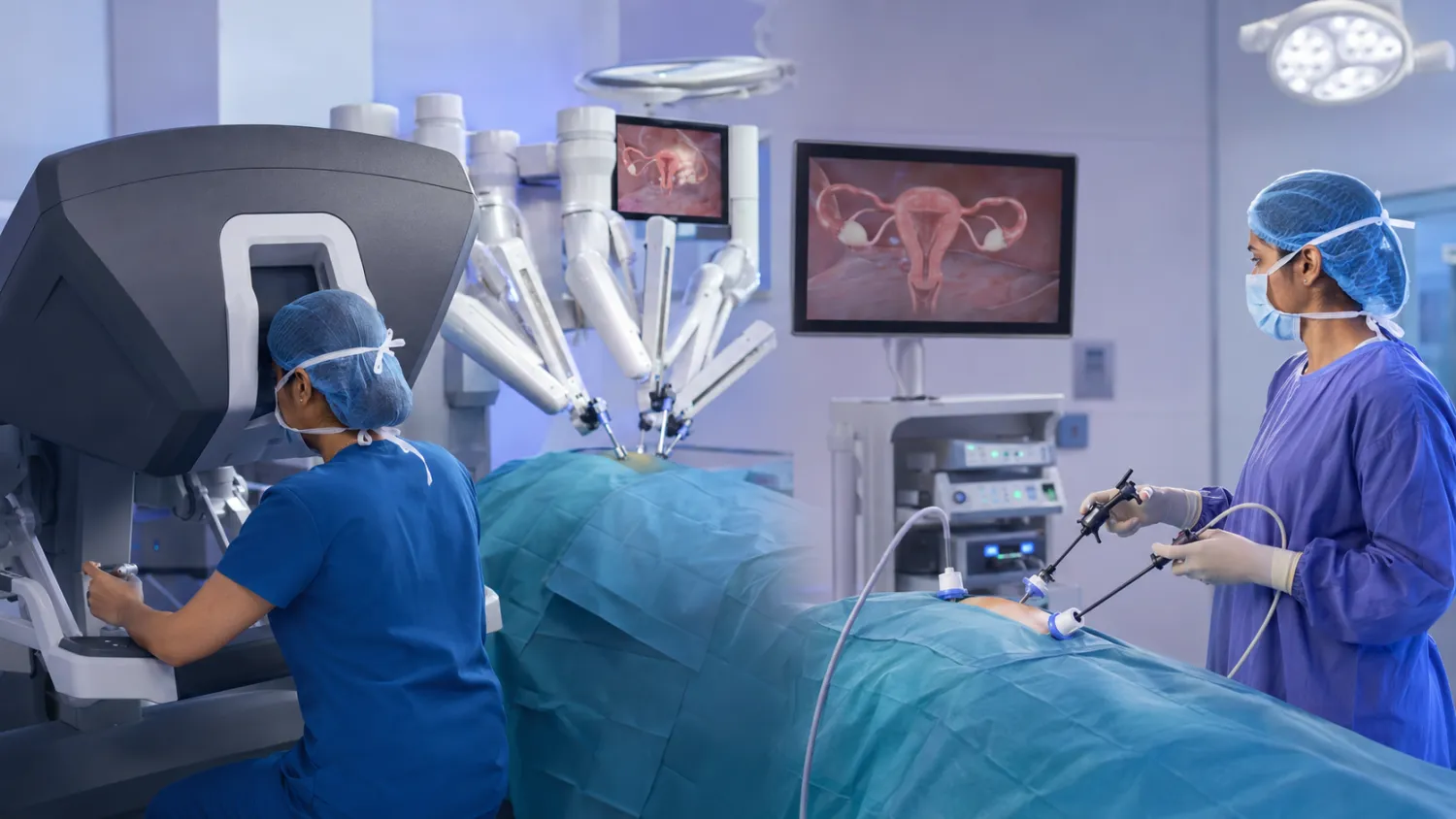
Two commonly used minimally invasive techniques are laparoscopic surgery and robotic-assisted surgery. Patients comparing robotic surgery vs laparoscopic surgery often want to know which technique is safer, how they differ, how much recovery time is required and whether robotic surgery justifies the additional cost.
Both techniques can be effective, but one is not automatically better for every patient. The right approach depends on the medical condition, complexity of the surgery, previous operations, overall health and experience of the surgeon.
What Is Laparoscopic Gynaecological Surgery?
Laparoscopic surgery, also called keyhole surgery, is performed through small incisions in the abdomen. A thin instrument containing a camera, known as a laparoscope, is inserted to provide a magnified view of the pelvic organs on a monitor.
The surgeon controls long, specialised instruments directly by hand to perform the procedure. Laparoscopic surgery may be used for:
-
Uterine fibroids
-
Ovarian cysts
-
Endometriosis
-
Ectopic pregnancy
-
Hysterectomy
-
Pelvic adhesions
-
Diagnostic evaluation of pelvic pain
-
Selected gynaecological cancers
Compared with traditional open surgery, laparoscopy generally causes less tissue trauma and may allow patients to recover sooner.
What Is Robotic Gynaecological Surgery?
Robotic gynaecological surgery is an advanced form of minimally invasive surgery. During the procedure, the surgeon sits at a console and controls robotic instruments placed through small abdominal incisions.
The robot does not operate independently or make decisions. Every movement is directed by the surgeon. The system translates the surgeon’s hand movements into precise movements of small instruments inside the body.
Robotic systems can provide a magnified, high-definition, three-dimensional view of the surgical area. Their wristed instruments can move with a greater range of motion than conventional laparoscopic instruments. These features may be particularly helpful during complex procedures requiring careful dissection and suturing.
Robotic Surgery vs Laparoscopic Surgery: The Main Differences
Although both approaches use small incisions, their technology and method of instrument control are different.
Surgical view
Conventional laparoscopy usually provides a magnified two-dimensional view, although some advanced systems offer three-dimensional imaging. Robotic surgery commonly provides a magnified three-dimensional view that may improve depth perception during complex procedures.
Instrument movement
Laparoscopic instruments are relatively rigid and are controlled directly by the surgeon. Robotic instruments have wrist-like movement, allowing greater flexibility in confined areas of the pelvis.
Precision and control
The robotic platform can filter natural hand tremors and translate large hand movements into smaller, controlled movements. This can help with delicate dissection, suturing and operating close to important structures.
However, excellent outcomes can also be achieved through conventional laparoscopy when the procedure is performed by a suitably trained and experienced surgeon.
Surgeon positioning
During laparoscopy, the surgeon stands beside the operating table and controls the instruments manually. During robotic surgery, the surgeon operates from an ergonomic console. This may reduce physical fatigue during lengthy or complex procedures.
Availability and cost
Laparoscopic surgery is more widely available and generally less expensive. Robotic surgery requires specialised equipment, a trained surgical team and an appropriately equipped hospital, which can increase the overall cost.
What Are the Benefits of Robotic Surgery?
Potential benefits of robotic surgery may include:
-
Enhanced three-dimensional visualisation
-
Greater instrument flexibility
-
Precise dissection and suturing
-
Better access to deep or narrow areas of the pelvis
-
Small incisions
-
Reduced blood loss in selected procedures
-
Shorter hospital stay compared with open surgery
-
Faster return to routine activities
-
Less visible scarring
These advantages can be valuable in complex gynaecological operations. However, benefits vary according to the procedure and the individual patient. Robotic surgery is not necessary for every condition.
What Are the Benefits of Laparoscopic Surgery?
Laparoscopic surgery also offers several advantages:
-
Small abdominal incisions
-
Less postoperative pain than open surgery
-
Shorter hospital stay
-
Quicker recovery
-
Lower cost than robotic surgery in many cases
-
Wider availability
-
Effective treatment for numerous routine gynaecological conditions
For straightforward procedures, conventional laparoscopy may provide excellent results without the need for robotic technology.
Which Conditions May Benefit from Robotic Surgery?
A surgeon may consider a robotic approach for selected patients with:
-
Large or multiple uterine fibroids
-
Deep endometriosis
-
Complex ovarian cysts
-
Severe pelvic adhesions
-
A history of previous abdominal surgery
-
Obesity or challenging pelvic anatomy
-
Uterine or endometrial cancer
-
Cervical cancer in carefully selected cases
-
Complex hysterectomy
-
Pelvic organ prolapse
For example, robotic myomectomy may help the surgeon remove fibroids while carefully reconstructing the uterus. In selected cancer procedures, the enhanced view and flexible instruments may assist precise dissection around important pelvic structures.
The suitability of robotic surgery must be determined after reviewing the diagnosis, imaging, medical history and treatment goals.
Which Surgery Offers Faster Recovery?
Recovery after robotic and laparoscopic surgery is often similar because both use small incisions. Many patients can begin walking soon after surgery and may leave the hospital within one or two days, depending on the procedure and their health.
Return to work may take approximately one to four weeks, while complete recovery can take longer. A minor laparoscopic procedure will naturally have a shorter recovery period than a complex robotic hysterectomy or cancer operation.
Recovery depends more on the type and complexity of the surgery than on the technology alone. Patients should follow their surgeon’s advice regarding lifting, driving, exercise and sexual activity.
Is Robotic Surgery Safer Than Laparoscopic Surgery?
Both procedures are generally considered safe when performed for the right indication by an experienced surgical team. Like every operation, they carry potential risks, including bleeding, infection, anaesthesia-related complications, blood clots and injury to nearby organs.
Robotic technology may provide technical advantages during certain complicated operations, but it does not eliminate surgical risk. The surgeon’s experience, patient selection, hospital facilities and postoperative care remain central to safety.
When comparing robotic surgery vs laparoscopic surgery, patients should look beyond the equipment and discuss the surgeon’s experience with the recommended procedure.
How Do the Costs Compare?
Robotic surgery generally costs more than conventional laparoscopy because it involves advanced equipment, specialised instruments and trained personnel. The final expense depends on:
-
Type and complexity of surgery
-
Hospital and room category
-
Duration of hospitalisation
-
Investigations and medicines
-
Surgeon and anaesthesia charges
-
Insurance coverage
-
Need for additional treatment
Cost should be considered alongside clinical suitability. Choosing a more expensive technique does not guarantee a better outcome, while choosing only on the basis of the lowest price may not be appropriate for a complex condition.
Patients should request an individual estimate after consultation and confirm coverage with their insurance provider.
How Is the Right Surgical Approach Selected?
The choice between robotic and laparoscopic surgery should be personalised. Your gynaecological surgeon may consider:
-
Diagnosis and severity of the condition
-
Size and location of fibroids, cysts or tumours
-
Previous abdominal or pelvic surgeries
-
Presence of scar tissue or adhesions
-
Age and overall health
-
Fertility and uterus-preservation goals
-
Possibility of cancer
-
Expected surgical complexity
-
Availability and cost
-
Surgeon’s training and experience
In some cases, laparoscopy is the most practical and effective option. In others, robotic assistance may offer better access and control. Occasionally, open surgery may still be the safest approach.
Questions to Ask Before Surgery
Before making a decision, consider asking your surgeon:
-
Why is surgery recommended in my case?
-
Can my condition be treated without surgery?
-
Why do you recommend robotic surgery, laparoscopy or open surgery?
-
How experienced are you in this particular procedure?
-
Can my uterus or ovaries be preserved?
-
What are the possible risks and benefits?
-
How long will I remain in the hospital?
-
When can I return to work and normal activities?
-
What will the estimated treatment cost be?
-
Is there a possibility of converting to open surgery?
So, Which Technique Is Better?
There is no single winner in the debate over robotic surgery vs laparoscopic surgery. Laparoscopy is an effective, established and cost-conscious option for many routine gynaecological procedures. Robotic surgery may provide additional precision, flexibility and visualisation during selected complex operations.
The best technique is the one that safely addresses your condition while considering your anatomy, treatment goals and overall health. Most importantly, the technology should be supported by a surgeon with extensive experience in minimally invasive and complex gynaecological surgery.
Consult Dr Usha M Kumar
If you have been advised to undergo gynaecological surgery, a detailed evaluation can help determine whether robotic surgery, laparoscopic surgery or another treatment approach is suitable for you.
Dr Usha M Kumar is a Director-level Gynaecologic and Robotic Surgeon at Max Smart Super Speciality Hospital, Saket. With more than 30 years of experience and over 10,000 surgeries performed, she specialises in robotic and laparoscopic gynaecological surgery, gynaecologic oncology and complex women’s health conditions.
Have questions or need to schedule an appointment? Get in touch with Dr Usha M Kumar and her team for expert guidance and compassionate women’s healthcare. The team is available to assist you with appointments, consultations and treatment-related queries.
For appointments, call: +91-9999293741