





Posted By: Dr. Usha M Kumar on 19 Nov 2026
When a doctor says you need your uterus removed, the room can go very quiet. You may nod, collect the papers, and only on the drive home start wondering whether it is really the only option. Is the surgery necessary? Could something simpler work? Should the ovaries stay or go? And does it matter who operates, or how?
If these questions are running through your mind, you are thinking exactly as you should. A hysterectomy is a major decision and, in most cases, a permanent one. Getting a second opinion before a hysterectomy is not rude, disloyal or a waste of time. It is a normal and sensible part of good care, and any confident surgeon will welcome it.
This guide explains when a second opinion is especially useful, how to prepare for it, and the questions worth asking.
Why a second opinion makes sense
Hysterectomy is the right and often life-improving treatment for many women. But it is also true that it is sometimes recommended when other options might have worked, and that opinions between doctors genuinely differ. A second opinion can:
- Confirm the diagnosis. Sometimes scan findings can be read differently, and it helps to have the picture checked.
- Show you alternatives. For instance, fibroids can often be removed while keeping the womb, and heavy bleeding can sometimes be controlled with medicines or a small procedure.
- Clarify the approach. Open, laparoscopic and robotic surgery all exist, and the best fit depends on your case and the surgeon’s training.
- Give you peace of mind. Even when the second doctor agrees with the first, you go into surgery feeling certain rather than pushed.
One caution: if you have been told there is a suspected cancer, do not let the search for another opinion cause long delays. In those situations, speed matters, and a gynaecologic oncologist should usually be involved quickly. Read more about this on our gynaecologic oncology page.
When you should especially consider one
A second opinion is worth seeking if:
- You are under 45 or still hoping to have children (or are unsure)
- The reason for surgery is fibroids, heavy bleeding, adenomyosis or endometriosis, where several treatments exist
- You have been told you need open surgery and want to know if a minimally invasive approach is possible
- You are being advised to remove your ovaries as well
- You feel rushed, or your questions have not been answered clearly
- Your symptoms and your scan reports do not seem to match up
- The cost, hospital or surgeon was suggested without a clear explanation of why
Know what you are being offered
Before asking for opinions, it helps to understand the terms used.
Total hysterectomy removes the uterus and cervix. Subtotal hysterectomy leaves the cervix. Salpingectomy removes the fallopian tubes, and oophorectomy removes the ovaries. A hysterectomy does not automatically include removing the ovaries, and this is one of the most important points to clarify.
If both ovaries are removed before natural menopause, you will enter menopause straight away, a condition known as surgical menopause. If the ovaries are left in place, you will stop having periods but will not go into menopause because of the surgery itself. There are good reasons to remove ovaries in some cases, such as certain cancers or a strong family history, but it should be a reasoned decision.
For a fuller picture of the operation, you can read our page on hysterectomy and our patient guide to robotic hysterectomy in Saket.
How to prepare for a second opinion
A little preparation makes the appointment far more useful.
- Collect your records. Bring all your ultrasound reports and, ideally, the scan images or discs, MRI reports, blood tests, biopsy or Pap results, and previous prescriptions.
- Note your story. Write down when your symptoms began, how heavy your periods are, how they affect your day, and what treatments you have already tried.
- List your priorities. Do you want to preserve fertility? Return to work quickly? Avoid hormonal medicines? Say so clearly, because it shapes the advice.
- Bring a family member if you can. A second pair of ears is helpful when a lot of information comes at once.
- Tell the new doctor what you were advised. There is no need to hide it. It helps them focus on what matters.
Questions to ask your surgeon
You can use these questions with the first surgeon, the second or both.
About the need for surgery
- What exactly is my diagnosis, and how was it confirmed?
- Is surgery necessary now, or can I try other treatments first?
- What happens if I wait or choose not to operate?
- Are there treatments that would let me keep my uterus?
About the type of surgery
- Which type of hysterectomy are you recommending, and why?
- Do you recommend removing my ovaries and tubes? Why or why not?
- Can this be done laparoscopically or with robotic assistance? If not, why? You can read about the differences on our laparoscopic surgery page.
About the surgeon’s experience
- How many of these operations do you perform each year?
- What is your experience with the approach you are recommending?
- Who will be in the operating room with me, and who will look after me afterwards?
About risks and recovery
- What are the risks in my specific case, not just in general?
- How long will I be in hospital, and how long will recovery take?
- When can I go back to work, travel, exercise and resume normal activities?
- What will follow-up look like?
About cost and logistics
- What is included in the estimate, and what could add to it?
- Will my insurance cover this procedure?
A good doctor will answer these clearly and patiently. If you feel brushed off, that tells you something too.
Alternatives that might be worth discussing
Depending on your diagnosis, other options may include:
- For fibroids: medicines, a myomectomy (removal of the fibroids while preserving the uterus), or other uterus-sparing procedures. See our guide to fibroids and heavy periods and our fibroid treatment page.
- For heavy bleeding: tranexamic acid, hormonal treatment, a hormone-releasing coil, or a hysteroscopic procedure. Our hysteroscopy page explains how the womb can be looked at directly.
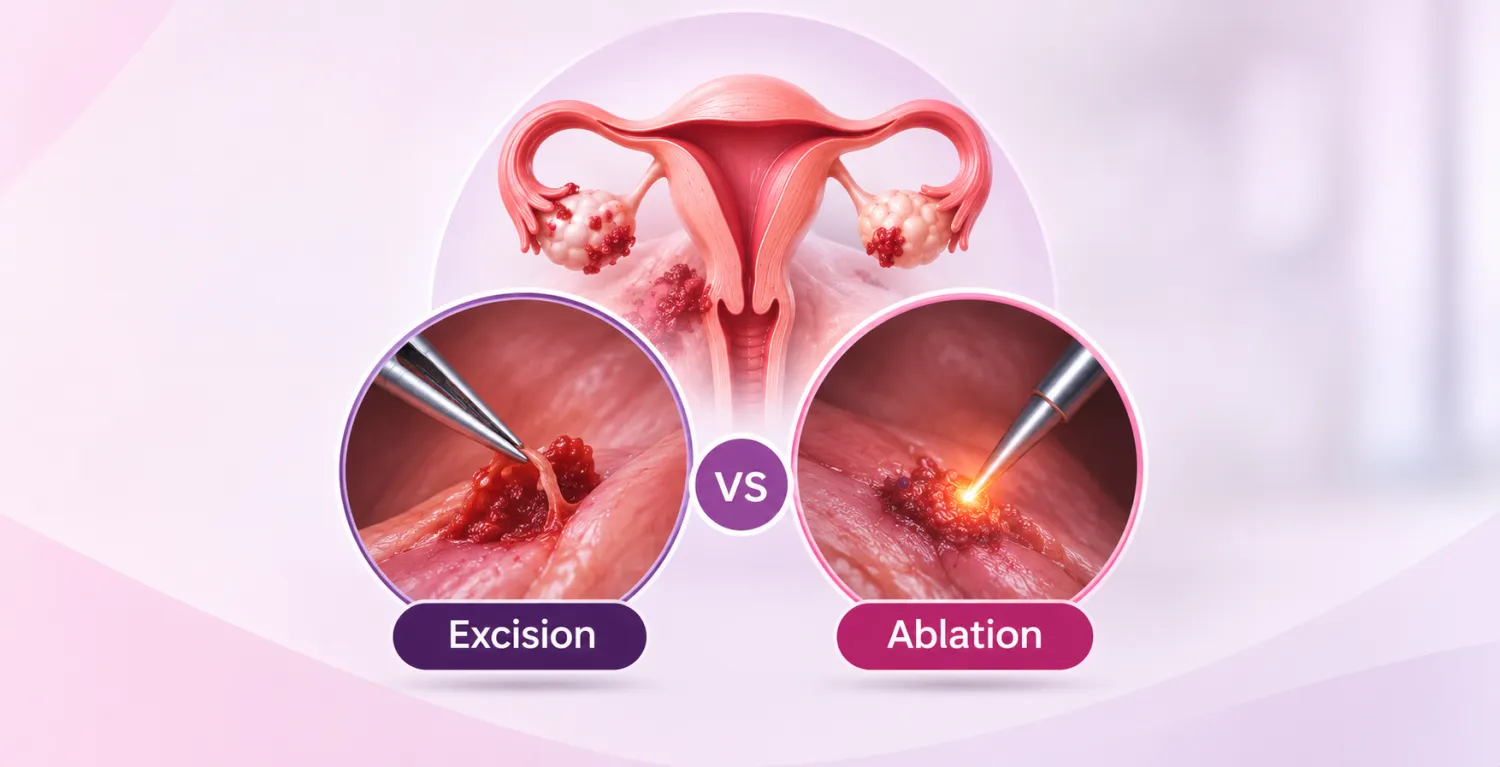
- For endometriosis: hormonal treatment, or excision of the disease, which may avoid the need for hysterectomy in some women. See endometriosis in young women.
- For prolapse: pelvic floor therapy, a supportive device or repair surgeries that may keep the uterus in place.
Sometimes none of these will suit you, and hysterectomy really is the best choice. That is a perfectly valid outcome of a second opinion. You will simply be making the decision with more confidence.
What if the two opinions disagree?
This happens, and it does not mean one doctor is wrong. Ask each of them to explain their reasoning, and compare it with your priorities. If they still differ, a third opinion or a discussion with a doctor you trust can help. Pay attention to who gives clearer explanations, offers options and is willing to discuss risks honestly.
Can you get a second opinion online?
Yes. If your reports and scans are available, a telephone or video consultation can be a convenient first step, especially if you are outside Delhi or short on time. A physical examination may still be needed before final advice. For more on picking a doctor, see our guide on how to choose a gynaecologist in Delhi.
Frequently asked questions
Will my surgeon be offended if I seek a second opinion? A good one will not be. Seeking a second opinion is common practice in medicine.
How long does a second opinion take? Usually one consultation, though additional tests may be advised.
Is a second opinion only for big decisions? It is most valuable for planned (non-emergency) surgery such as hysterectomy.
Will I lose time by seeking one? Only a few days or weeks for most benign conditions. For cancer or emergencies, do not delay.
Take your time, and ask your questions
A hysterectomy should never be a decision made under pressure. Dr. Usha M Kumar, with over 30 years of experience and more than 10,000 surgeries across open, laparoscopic and robotic techniques, regularly sees women who want a careful, unhurried review of their options. You can read about Dr. Usha, then book an appointment or contact the clinic.
Disclaimer: This article is for general information and does not replace a personal medical consultation.